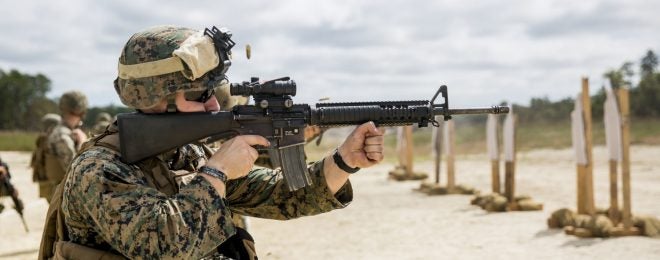
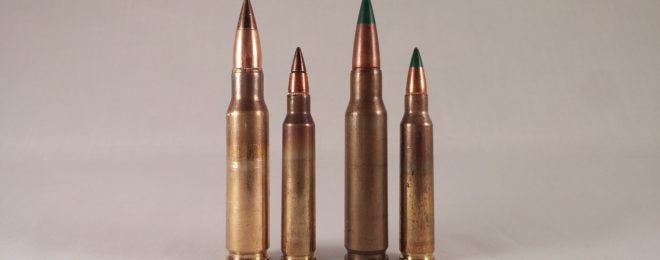
The Armalite AR-10 is the original lightweight 7.62mm combat rifle – a space-age amalgam of aluminum, steel, and advanced plastics capable of a rate of fire of 800 rounds per minute and weighing just a hair over 7 pounds, unloaded. Its younger, 5.56mm caliber [Read More…]
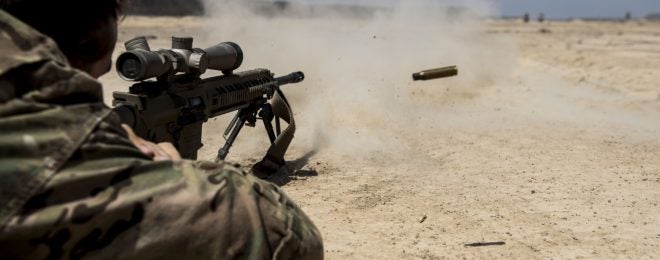
The US Army’s embattled CSASS program has moved forward slightly with a sources sought notice posted to the Fed Biz Opps website, seeking manufacturers who can make many of the accessories that equip the M110A1 rifle. The notice isn’t itself for a contract, [Read More…]
Although the Russian Kalashnikov assault rifle is the one that is most famous, it is arguably the Chinese Type 56 AK that made the bigger impression on the world in the 1960s and 70s. This rifle was initially developed with Russian technical assistance just before the [Read More…]
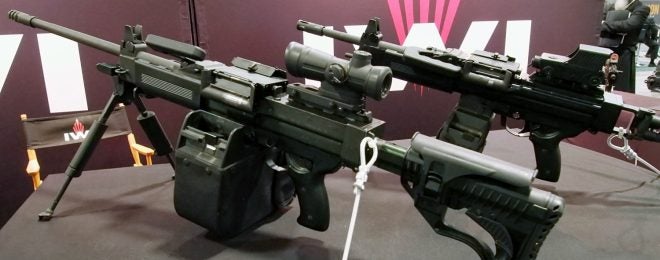
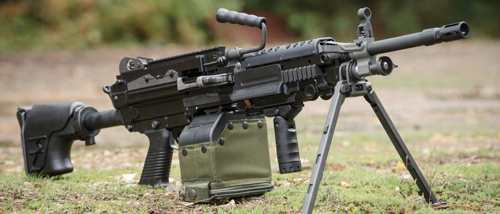
Rounding out our coverage of Machinegunapalooza 2017 – by which I mean the numerous machine guns of the 2017 Association of the United States Army annual meeting – we have the IWI Negev (5.56mm) and Negev NG-7 light machine guns. These Israeli belt feds are, [Read More…]
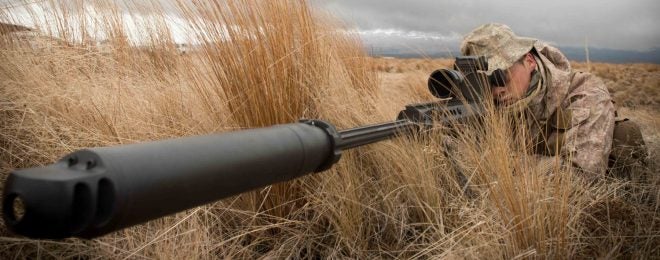
The New Zealand Defence Force (NZDF) is procuring two long range rifles from US manufacturer Barrett Firearms Manufacturing. The island armed forces will be purchasing the .50 BMG caliber M107A1 anti materiel rifle as well as the .338 Lapua Magnum caliber Multi Role [Read More…]
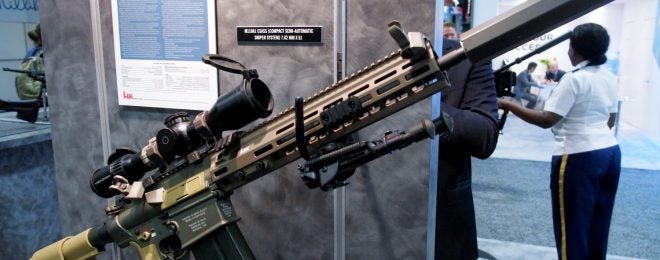
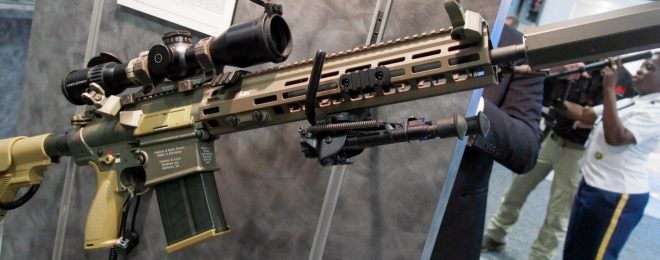
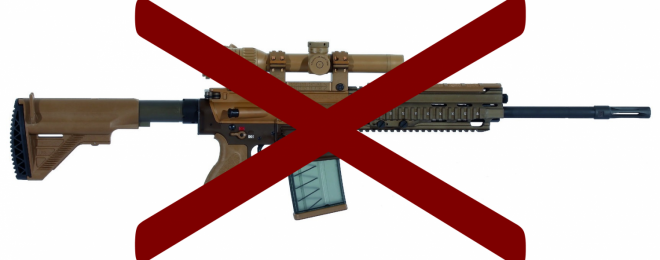
At the 2017 Association of the United States Army annual meeting, Oberndorf gunmaker Heckler & Koch had on display the latest configuration of their CSASS winning rifle, the G28E-based M110A1. The rifle is similar to the M110A1 displayed at the 2017 SHOT Show in Las [Read More…]
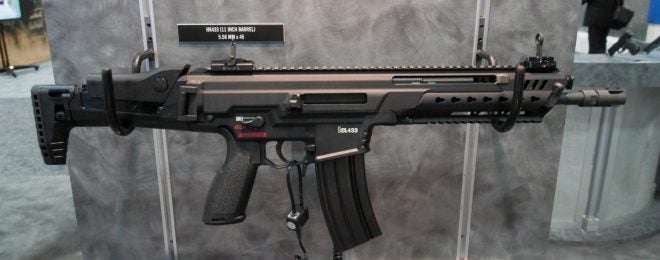
The HK433 family is going full power, Heckler & Koch told TFB at the 2017 Association of the United States Army annual meeting. When speaking to representatives of the company about their new rifle which was being shown off in the USA for the first time, I asked the [Read More…]
In examining the future of infantry capability, we must not only be aware of potential technological solutions, but of the need to re-think and re-work what it means to train and prepare troops for future battlefields. At the core of this is the simple matter of man and [Read More…]
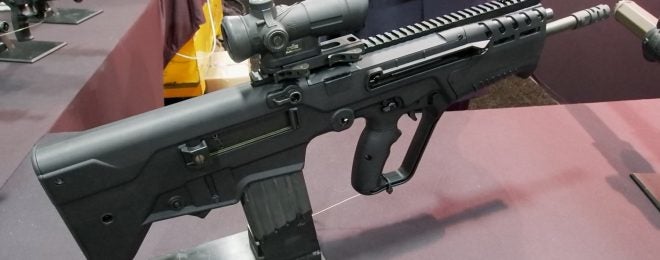
The 2017 Association of the US Army annual meeting was the public debut of Israel’s new full caliber bullpup rifle, the Tavor 7. Announced in late June via IWI’s Facebook page, the Tavor 7 is a 7.62mm / .308 Winchester caliber semiautomatic bullpup rifle [Read More…]
With the recent push for small arms ammunition with increased range, power and capability, are military customers in danger of being taken for a ride by industry marketeers working to sell rifles in new calibers? Is the primary driving force behind new infantry [Read More…]
We have just seen the cancellation of the Interim Combat Service Rifle, which gives me a good springboard to talk about marketing. Specifically, we will be discussing a kind of undercover word-of-mouth marketing that I’ve encountered a number of times over the [Read More…]
The US Army’s program to field a new standard-issue 7.62mm caliber rifle is dead in the water, it seems. Multiple anonymous sources have informed TFB that the Interim Combat Service Rifle program has been cancelled as part of a massive review of US Army small [Read More…]
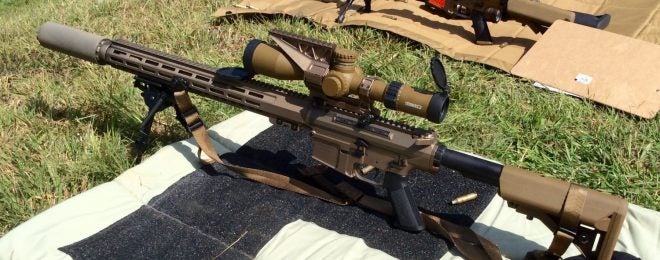
Geissele has taken the step from manufacturing accessories, to making the guns themselves: The company released its new VSASS semiautomatic sniper rifle system at the Modern Day Marine 2017 industry demonstration. News of the new rifle was first broken by Soldier [Read More…]
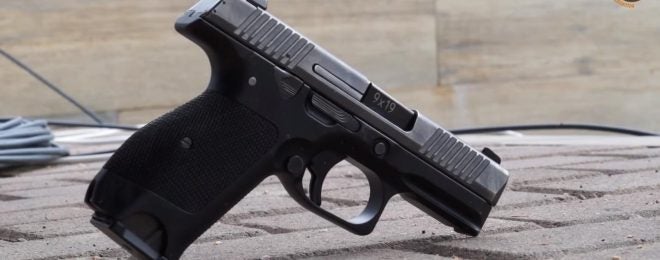
Kalashnikov Concern recently released a new English language video regarding their PL-15K compact pistol, MP-444 pistol, AM-17 and AMB-17 compact assault rifles, and SVCh semiautomatic sniper rifle. By way of a walkthrough from Kalashnikov Concern technical consultant [Read More…]
Manufacturers who are gearing up for the US Army’s Interim Combat Service Rifle competition better know where to get their ammo for testing, and the Army is ready to help. The US Army is facilitating the procurement of 7.62mm M80A1 ammunition to competitors for [Read More…]
Yes, the M4 Carbine will be replaced by a 7.62mm Interim Combat Service Rifle, and also no it won’t. Ah, I see I need to explain. This past weekend, I published an article reporting on the ICSR program’s recently released request for proposal (RFP), and [Read More…]
The Land Component of the Belgian Armed Forces will soon be retiring the venerable 7.62x51mm MAG M2 (FN MAG medium machine gun) for FN Herstals 7.62x51mm Minimi Mk3. Specifically 242 machine guns will be bought with an order of 2 million Euros from the countries own FN [Read More…]
Modern? Sure, but let’s take a step back… Way back. It’s 1890 and smokeless powder has just been invented. There’s this guy named Rubin going around and spreading the gospel of the small caliber, high velocity .30″ bore round. You’re [Read More…]
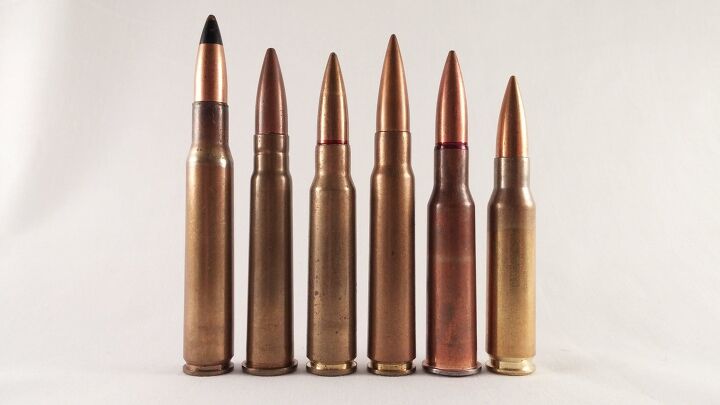
Shouldn’t “Modern Full Power Calibers” be its own series? No, because then there would only be two episodes! So instead, we’re rolling today’s two most popular full power .30 cal rounds into the series on intermediates, primarily as [Read More…]
Perhaps the oldest rival of the 5.56mm round is its older brother in the intermediate cartridge world, the 7.62x39mm round developed by the Soviets in the late 1940s from their earlier 7.62×41 M43 cartridge. The 7.62x39mm, despite its age, has maintained a very [Read More…]
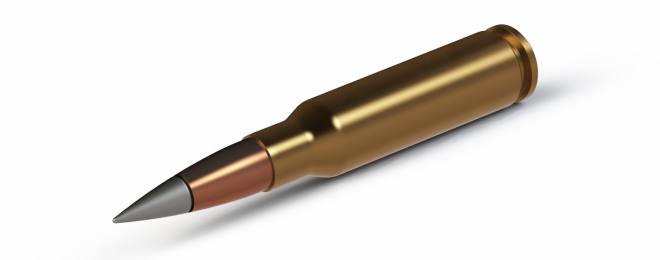
Previously, courtesy of The Wound Channel we got our first looks at the stellar ballistics of the 7.62mm M80A1 EPR round, which proved to combine excellent fragmentation with good armor penetration and barrier blind characteristics, while being extremely consistent. [Read More…]
At this point, I’ve written relatively few articles about small arms design in general, due to my time going to a certain other writing project. However, small arms design and theory has always captivated me, since the beginning of my interest in firearms. Ian [Read More…]
Kalashnikov USA has come out with a press release stating their new products are ready for sale/shipping in the United States, under the new banner “Russian Heritage/ American Innovation”. The company is not directly connected with Kalashnikov Concern (more [Read More…]
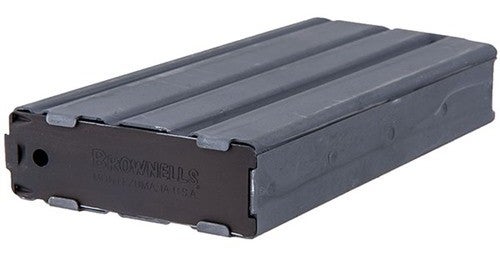
Brownells has come out with their own .308/ 7.62x51mm twenty round magazines for the AR platform. They have the brown anti tilt followers as well. They are retailing for $19.99 from the standard website and $16.97 if you have a dealer/discount account on their website. [Read More…]

 Your Privacy Choices