Project Poplin - Soviet Request For A Better 5.45 Light Machine Gun

Light machine guns and automatic rifles emerged shortly before the First World War to enhance the firepower of infantry units. By the end of World War II, these weapons were typically employed within a fire team or squad. In modern military structures, infantry units are formed with tactics centered around using light machine guns for suppressive fire. In the early 1970s, the Soviet Union recognized the need to enhance the firepower of infantry squads as they had previously moved from the RPD to the RPK. While the RPK light machine gun was in service, it functioned more like an automatic rifle, with limited effectiveness in providing high volumes of fire. In response to this need, the development of the 5.45 mm light machine gun program, known as "Poplin," was initiated in 1973 by order of the Minister of Defense of the USSR.

Nikonov's Double XP Experimental Machine Gun
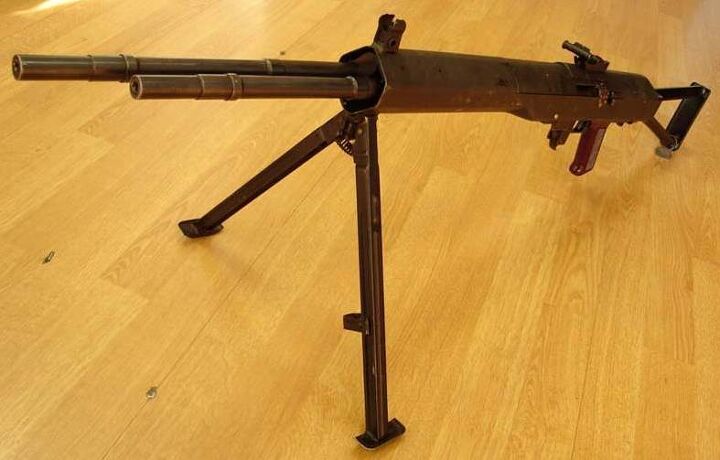
Gennady Nikolaevich Nikonov was a highly regarded weapons designer best known for his work on the short-lived AN-94 Abakan. Throughout his impressive career at the Izhevsk Machine-Building Plant, he contributed to developing several unique and innovative solutions. In 1977, he designed and completed an experimental light machine gun in 1978. This machine gun pushed the boundaries of practical application by demonstrating a fire rate that exceeded the capabilities of conventional operating systems.
The Russian SAW - The Kord 5.45 Light Assault Machine Gun
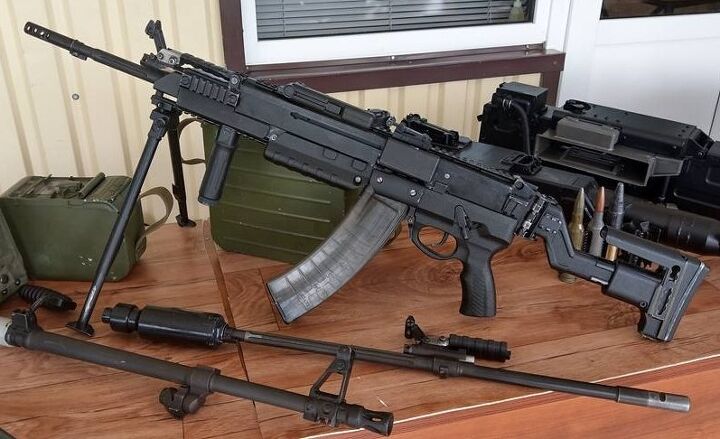
In December 2010, the Russian Ministry of Internal Affairs initiated the Tokar research and development program, followed by Tokar-2 in 2016, to create a 5.45mm light assault machine gun. This initiative was likely influenced by the capture of IWI Negev light machine guns from the Georgian Army during the 2008 Russo-Georgian War. One of the primary requirements for the Tokar-2 was to integrate a dual or combined feed system that would utilize both a magazine and a belt. JSC "V.A. Degtyarev Plant" (ZID) developed the Kord 5.45 light machine gun.
The Quick Reload Perk - OTs-124 and OTs-128 Machine Guns

This fascinating series of experimental machine guns was first publicly revealed in 2018. They were developed by TsKIB SOO, the Central Design and Research Bureau of Sporting and Hunting Arms, a Tula KBP Instrument Design Bureau subsidiary. CEO Alexey Sorokin led the project, which included a design team focused on creating a series of weapons based on the OTs-129/MTs-566.
The Big PK - The FK BRNO BKS 338 Machine Gun
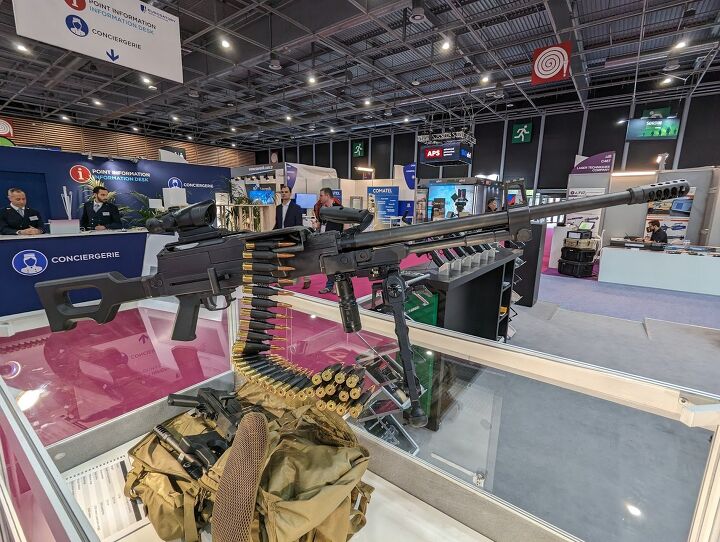
The .338 Norma Magnum has been a prominent topic for bridging capability gaps in military applications for over a decade. Domestic and international defense contractors actively seek to enhance overmatch and increase lethality while reducing the weight to get a larger caliber in the fight. One notable company in this arena is FK BRNO, a Czech defense firm specializing in designing and manufacturing firearms. FK BRNO recently developed the BKS .338 medium machine gun, unveiled at the Eurosatory 2024 defense exhibition. It was an unexpected development since this was the company's first machine gun design.
The DPRK Type 73 Machine Gun

The North Korean Type 73 has drawn attention for its role in the Russian so-called Special Military Operation (SVO), which refers to the Russo-Ukrainian War. This conflict is complex and has evolved significantly over time. The deployment of ground forces from the Democratic People's Republic of Korea (DPRK) into the SVO has raised several questions, especially since this involvement was first noted in November 2024.
[IDEX 2025] M84M – Modernised GPMG from Zastava Arms
![[IDEX 2025] M84M – Modernised GPMG from Zastava Arms](https://cdn-fastly.thefirearmblog.com/media/2025/03/12/04191/idex-2025-m84m-modernised-gpmg-from-zastava-arms.jpg?size=720x845&nocrop=1)
At the IDEX 2025, Zastava Arms from Serbia presented their version of modernized PKM called M84M. There are a few key improvements: the M84M machine gun has a Picatinny rail on the receiver cover and elevated iron sights. The rear sight is attached to the rail. M84M also has a new stock that resembles FN MAG.

A New LMG for the Hungarian Defense Forces: The Gestamen G224

Gestamen has developed the G224 light machine gun to modernize the Hungarian Defense Forces' squad automatic weapon lineup, offering a domestic alternative to legacy designs like the M249 SAW and FN Minimi. Chambered in 5.56 NATO, the G224 is a gas-operated, air-cooled, belt-fed LMG with a quick-detach barrel featuring trapezoidal cooling fins for better heat dissipation. The G224 also includes a STANAG magazine well, allowing compatibility with standard AR-15 magazines for added versatility in the field. Built with a monolithic forged receiver and a side-folding, telescopic stock, this LMG is designed for durability, adaptability, and modern battlefield effectiveness. With the Hungarian military set to field this weapon in the coming years, could the G224 be a worthy successor to the M249 SAW and FN Minimi in NATO arsenals?

Replacement of the PKM with the M240 in the Georgian Army

This is a continuation of my machine gun series. In 2008, NATO supported Georgia's bid to join the alliance and created a commission to oversee the accession process. Georgia must fulfill several requirements, including modernizing its army and standardizing Western weapons and ammunition. In 2017, the Georgian Ministry of Defense started replacing the Soviet-made PKM general-purpose machine guns with the M240B 7.62x51mm medium machine gun.
Azerbaijan PKM Production

This series of articles primarily focuses on the post-Soviet states in the South Caucasus region, which have inherited large stockpiles of arms from the collapse of the Soviet Union in 1991. However, these stockpiles are finite and are rapidly depleted during conflicts. This issue is particularly evident in the long-standing tensions between Azerbaijan and Armenia over regional territorial disputes, which trace back to the aftermath of World War I.
Armenian PKP Pecheneg Acquisition

The 2020 Second Nagorno-Karabakh War, also known as the 44-Day War, was a conflict in the disputed region of Nagorno-Karabakh dating back to the late 1980’s and early 1990’s. This conflict represented a notable escalation of longstanding tensions among Azerbaijan, Armenia, and the self-declared Armenian breakaway state of Artsakh.
The PKM vs M240 Debate

It is common to compare machine guns, particularly the PKM and the M240/MAG-58. This overview will provide a brief comparison. While the PKM shows strong performance on paper and during range evaluations, making it an excellent option for direct assault scenarios, the M240 may be more effective when tactics and doctrine are considered.
PKP Pecheneg Replacement, the PKP-M (6P41M)
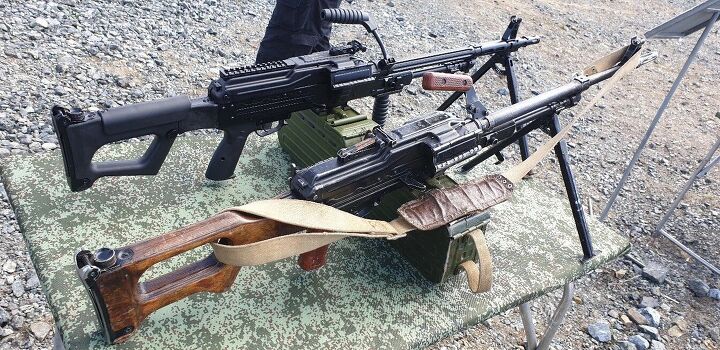
The modernization of Russian small arms began in 2012 with the Ratnik research and development program. This initiative successfully tested several weapons, including the AK-12, AK-15, A-545, AGS-30, SVD-M, 6P69 and 6P41M, all recommended for adoption. For the 6P41M, the V.A. Degtyarev plant started Pecheneg modernization efforts for a lightweight replacement for the PKP. The Russian Ministry of Defense adopted the 6P41M in 2017; however, very few units have been observed in the field since then.
The Russian 6P69 PKP-SP Special Forces Machine Gun
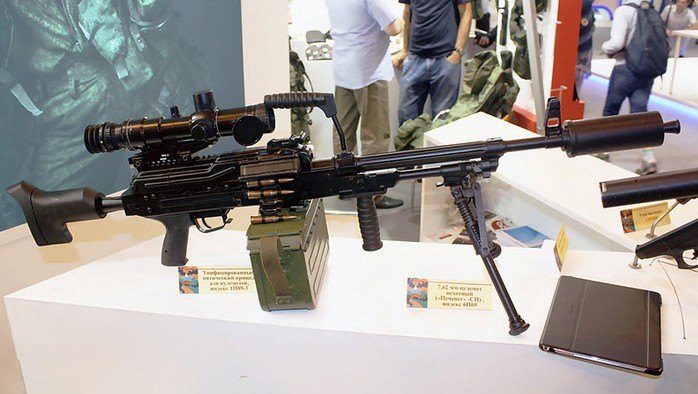
The V.A. Degtyarev plant, known for producing Russian PKM and PKP machine guns, started a modernization program to modernize the Pecheneg machine gun around 2012. This led to the creation of two variants: the 6P41M PKP-M, a potential lightweight replacement for the PKP, and the 6P69 PKP-SP, a machine gun designed specifically for special forces. In this article, we will delve into the unique features of the 6P69.
The Short-lived RPK-16 Light Machine Gun / Automatic Rifle

The RPK-16 was first unveiled in 2016. It appeared to be a successor to the RPK-74, following the typical design trends in Russian firearms. "RPK" refers to Kalashnikov's hand-held machine gun, commonly categorized as a light machine gun. However, the RPK series, including the RPK-16, is more accurately classified as an automatic rifle.
The Soviet Union Revisit of the GPMG Concept, the PK Series.

The earliest known example of the Soviet Union's development of a universal or general-purpose machine gun concept is the Degtyarev prototype in 1941. This was a tumultuous time for the Soviet Union as the war unfolded. As the conflict escalated, requirements shifted, and attention was diverted to other priorities. The Soviet Union needed a nudge to revisit this concept, which came in the form of the German MG34 and MG42 machine guns and the German military doctrine surrounding universal machine guns during the war.
Balanced Recoil Concept - Overhyped or a Gamechanger?

Over the years, numerous efforts have been made to improve the controllability and accuracy of firearms, notably automatic weapons. One such approach is the Balanced Action, which predates World War I. By incorporating a synchronized counter-recoiling balancer, designers aimed to reduce the recoil impulse generated by the weapon's moving parts by balancing the operating system. This system was intended to lessen the felt recoil, ultimately enhancing accuracy and controllability during bursts and automatic fire. However, this improvement also increased the firearm's design complexity.
Innovation from Isolation: The SS-77 Machine Gun

During a tumultuous period in South Africa's history, the country faced international sanctions related to the apartheid government, which turned South Africa into an international pariah. These sanctions lasted from 1962 to 1991. During this time, South Africa was engaged in military conflicts, conducting counter-insurgency operations against communists and rebel forces from Angola in the 23-year-long South African Border War and the Rhodesian Bush War. This situation significantly strained the South African Defense Force's weapons, as the embargo prevented access to replacement parts or new arms.
Kalashnikov Concern’s New 7.62x39 RPL-7 Light Machine Gun
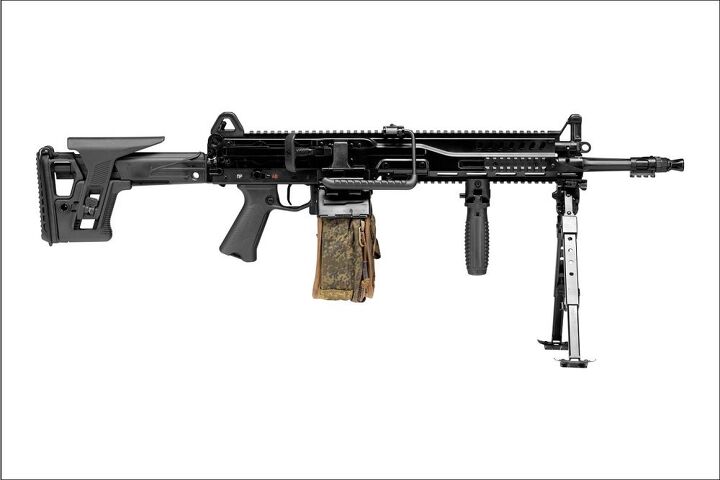
On January 24, 2025, Kalashnikov Concern announced new products on its Telegram channel that will be showcased at the IDEX 2025 arms exhibition in Abu Dhabi. The latest models include the AK-12K and AK-12SK, but the most notable introduction is the RPL-7, a version of the RPL-20 chambered in 7.62x39. This follows the previously confirmed export calibers of 5.56x45 and 7.62x39, announced in 2021.
The Stoner 63 Modular Weapon System

My first encounter with the Stoner 63 was at the Infantry Museum in Fort Benning, Georgia, after completing Infantry One Station Unit Training. The exhibit showcased the system's unique and versatile configurations, with the carbine and belt-fed machine gun standing out. This was a testament to the Stoner 63's innovative and adaptable design, making it a fascinating modular weapon system.
The Russian PKP Pecheneg Machine Gun
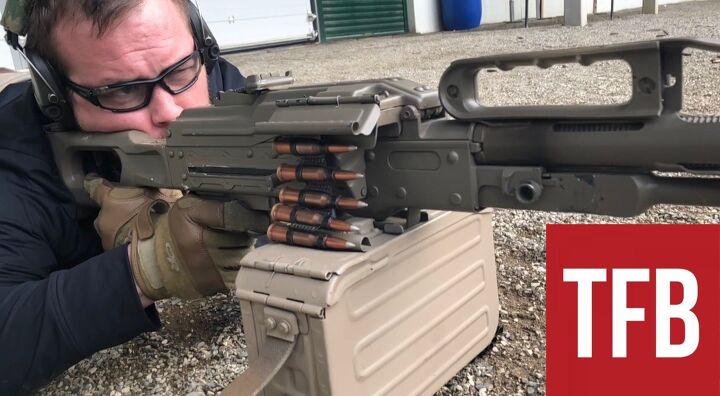
In the late 1990s, TsNIITochMash developed the PKP machine gun, a unique weapon designed to reduce dispersion and increase cooling for rapid, sustained fire. This weapon system was called the PKP, Pulemyot Kalashnikova Pekhotniy, meaning Infantry Kalashnikov Machine Gun. The Pecheneg is named after the Pecheneg people, a Turkic tribe known for their warrior culture in southern Russia and Ukraine.
The Chinese QJY-201 7.62x51 Machine Gun

The QJY-201, a machine gun with unique features, was publicly unveiled at the Zhuhai Airshow in September 2021. It is chambered in 7.62x51 and bears the ammunition type designation DJP-201 which suggests it’s more than an export machine gun. Over the past few years, China has been transitioning from 7.62x54R to 7.62x51 sniper rifles and machine guns.
Vietnam Defence Expo 2024: Negev Machinegun Chambered For 7.62x39
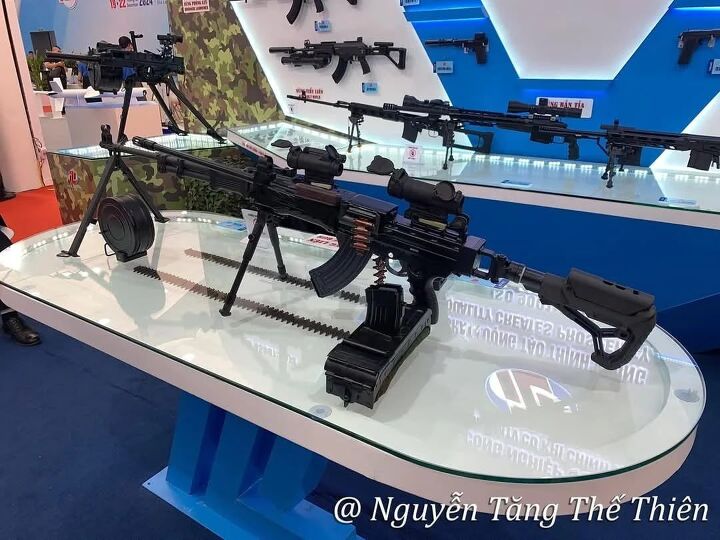
The Vietnam Defense Expo 2024 opened on December 19th, 2024. The highlight of the exhibition is the new small arms developed by the General Department of Defence Industry and produced at the Z111 Factory, the biggest and most famous Vietnamese arms manufacturer.
POTD: KSP 18B in Action - Dillon Aero M134D
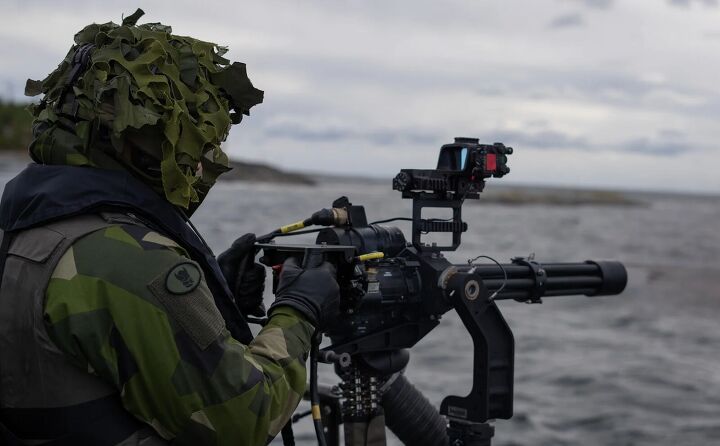
The Dillon Aero M134D Minigun is one machine that spits out more material than our Photo Of The Day. In the Swedish Navy, it’s called the KSP 18B, and here you can see it in action in preparation for the Swedish Amphibious Battalion 2030.

The Chinese QJB-201 Light Machine Gun
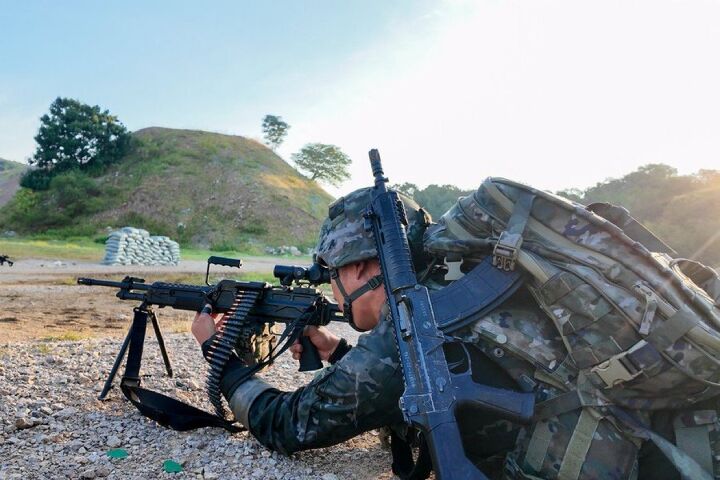
The QJB-201 is a significant addition to the new series of small arms designed to modernize the Chinese PLA ground forces. It is intended to replace the QJB-95 and QJY-88 light machine guns and is China's response to the US SAW. This new weapon and the QZB-191 family of firearms marks a shift in the PLA infantry structure, a clear sign of the modernization of the PLA forces.
POTD: French FN SCAR H PR, FN MAG 58 and HK416F

Someone brought a pretty good camera, a good lens and some skills to document the French 3rd Marine Infantry Parachute Regiment. This is great news for TFB’s Photo Of The Day, as we can share the FN SCAR H PR, the FN MAG 58 and the HK416F pictures with our readers. Going low with a tripod like this is something you should include in your skillset.
QJZ-171 - The Lightest Weight 12.7x10⁸ Machine Gun

The QJZ-171 large-caliber machine gun is a marvel of engineering, offering a 12.7x10⁸ weapon that bridges the weight gap between medium and heavy machine guns. Surprisingly, it provides a larger caliber in a weapon that weighs as much as a typical general-purpose or medium-machine gun. The QJZ-171, also known as the mountain large-caliber heavy machine gun, is perhaps the lightest .50 caliber machine gun available, weighing only 26.4 lbs (11.9 kg). This weight is nearly the same as the M240 or MAG58, yet it provides a significantly increased range, surpassing the .338 Norma Magnum in range and kinetic energy.
POTD: Multicam Superman & The FN M240L Machine Gun

The “Superman” title isn’t meant as a clickbait, I promise. It’s just the first thing I thought of when I saw the image above, as I was scouting more material for this Photo Of The Day. The images are from the U.S. Army Forces Command (FORSCOM), where indirect-fire infantrymen and cavalry scouts from Headquarters and Headquarters Company, 2nd Battalion, 37th Armor Regiment, 1st Brigade, 1st Armored Division, held an M240L machine gun zeroing and qualifications. I think our “Superman” is deploying a tripod on a timed event, and doing so with full speed.
From Goryunov’s SG-43 To Kalashnikov’s PK

The PK and PKM can be traced back to the Goryunov SG-43 medium machine gun, a testament to the unwavering perseverance of Kalashnikov's design team. Their dedication and hard work in refining the machine gun are genuinely inspiring. This historical evolution, from the SG-43 to the PK series, carries significant weight in the field of military technology.
The Russian RPL-20 Light Machine Gun
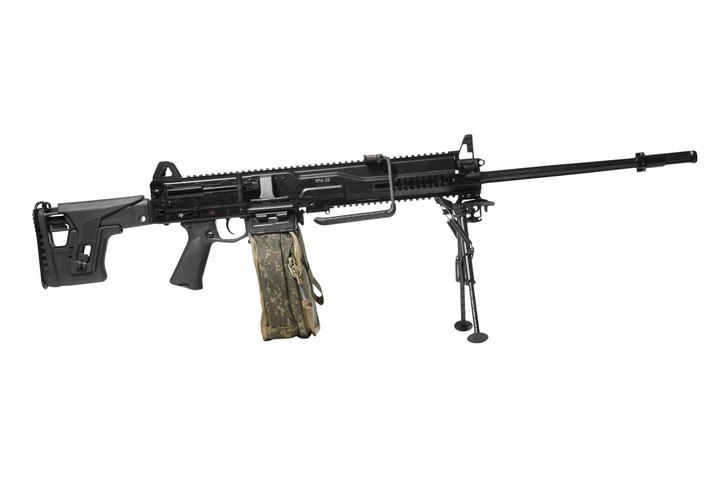
The RPL-20, a lightweight, belt-fed machine gun, is a testament to Russia's renewed interest in earlier Soviet technological innovations. The history of belt-fed light machine guns at the Kalashnikov Concern can be traced back to 1971 with the introduction of models such as the PU, PU-2, and PU-21. Drawing inspiration from the Belgian Minimi, these earlier models aimed to increase the RPK’s firepower. However, the dual-feed system has since been eliminated, simplifying manufacturing and enhancing the weapon's reliability. The RPL-20, with its lightweight design, is a promising addition to this lineage.