Poorly researched commentary on the M4/5.56mm debate

Fox News has published a badly written article about the whole M4/5.56mm debate. The article goes on and on about the limited range of the M4/5.56mm

An Army study found that the 5.56mm bullets fired from the M4s don’t retain enough velocity past 1,000 feet to kill an enemy. In Afghanistan, forces are often up to 2,500 feet apart.

They then quote commentator Maj. Gen. Robert Scales Jr. (Ret.) saying ...

Scales said the U.S. military simply needs to engineer a better weapon – he said the M8, a weapon that was under development before being halted several years ago, could be revived and improved for Afghanistan.

“We’re the world’s largest superpower. Why don’t we just make one,” Scales said. “This isn’t rocket science. We’re not putting a man on the moon here.”

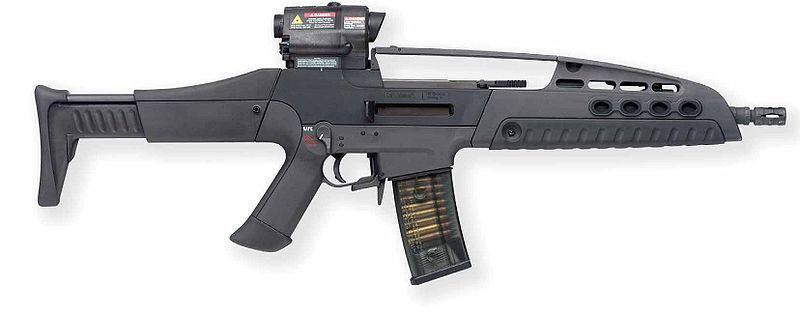
The "M8" would be the XM8 which, as I am sure you are all aware, chambers the 5.56mm ... sigh

H&K's XM8

[ Many thanks to Hugh for emailing me the link. ]

Related Posts

96 Responses to “Poorly researched commentary on the M4/5.56mm debate”

Sort The Responses Below: Most Recent | Highest Rated
  1. ryanwrote on January 04th, 2012 at 2:32 pm Link To Comment | Reply To Comment

    Reganrep,
    The AK-74′s 5.45 cartridge defeats body armor because the armor they are referring to is the soft body armor which is only designed to stop high power pistol caliber rounds. Keep in mind that the 5.45 is similar ballistically to the 5.56. In addition many Afghans and Somalians abuse drugs before going into battle which can cause issues when trying to drop them. I have heard of various issues with the fragmentation of the 5.56, however. Many of the literature about the terminal ballistics of the 5.56 recommends different types of rounds for different ranges. The nice thing about the 7.62 is even though it may not fragment, its nice and wide and can tear through just about anything at different ranges. This is why it has been used so often historically.

    Please rate this comment: Thumb up 0 Thumb down 0
  2. Geodkytwrote on May 07th, 2011 at 3:40 am Link To Comment | Reply To Comment

    Having duplicate uppers for each grunt is a non-starter as well, for operational and logistical reasons.

    1. Expense — the barrelled upper is the most expensive part of the AR system rifle. Even more so if you end up dedicating an optic for each upper (like ACOG for the rifle, Aimpoint for the carbine).

    2. A lot more “sensitive” shit to keep track of, and to reduce lifecycle costs, you’ll have to be sure the bolt stays with teh upper (yes, any in-spec bolt will safely work with any in-spec upper if both are the same caliber. . . but the difference in wear points will mean accelerated wear on a significant number of them. Not noticeable so much to the civilian casual shooter, but to the Green Machine, it adds up quickly.)

    3. I GAR-YUN-TEE you that Snuffy is gonna mount that carbine upper every single chance he gets. (See my comment from about a year ago on teh Chicks Dig It factor).

    4. Absolutely unnecessary — The carbine upper saves a whopping 5.5″ in length. The real advantage to the carbine is stow size (important to tank crewman and helo crews, not so much for One-One-Walkalots) and balance. Solutions? Carbon fiber free float tubes with short aluminum rails that can be bolted on IF and WHERE needed, and an emphasis on mounting gear closer to teh receiver where practical. Plus, you get better accuracy AND less heat transfer to the support hand.

    Please rate this comment: Thumb up 0 Thumb down 0
  3. Lancewrote on May 06th, 2011 at 7:52 am Link To Comment | Reply To Comment

    @Dr Pepper

    thats a concept the miitary has in the prototype Colt CM901. The marine are doing somthing simular with the new Mk 262rd and they are smart enought to issue riflemen with rifles.

    Please rate this comment: Thumb up 0 Thumb down 0
  4. Dr. Prepperwrote on May 05th, 2011 at 11:12 am Link To Comment | Reply To Comment

    How about going forward with the new 855A1 round, issuing each infantryman or ground pounder in Afghanistan a 20-inch A-4 upper for longer range engagement and letting them retain their 14.5 inch carbine upper as a backup when they melt the 20-incher???

    Then all they have to carry is that carbine upper strapped to their pack like a LAWS rocket.

    Please rate this comment: Thumb up 0 Thumb down 0
  5. Geodkytwrote on December 04th, 2010 at 5:49 am Link To Comment | Reply To Comment

    Or, heck, just stick a 20″ barrel on the M4. (Best case, start buying 20″ flat top uppers, either monolithic recivers or with carbon free float tubes that can mount rails. Canada, Colt, or any onf a nmber of North American companies will be HAPPY to give you an OTS solution as quickly as they can hire a third shift to increase production. Worst case, you have your armorers use those metric butt-tons of M16A2s with plenty of service life sitting in long term storage, and they use their barrel wrenches to swap them 1:1 with the M4 barrels on the rifles in their arms room — surplus the M4 uppers to police departments or allies either free or at a ridiculously low nominal fee, like $20 per. Hell, you can even slide on getting recalibrated sights for now — the trajectory delta will be a lot less than the range estimation errors!)

    Leave the M4s for people whose duty position’s A.) do not have them as primary combatants, and B.) are space limited either becuase they are vehicle bound or they have a bunch of OTHE crap to carry and worry about — medics, officers & senior NCOs, artillerymen, tankers, truck drivers, etc. If your duty billet is titled “Rifleman”, you DO NOT need a carbine. You are the LAST guy who should have a carbine. If EVERYONE in the army had carbines except dudes with bigger shoulder fired guns (snipers and M240 or M249 gunners), and EVERYONE wearing a blue rope in the rifle company had rifles except RTOs, weapons gunners (whether M203, MG, SAW, or Javelin — hell, let the AGs have carbines if you want!), and “platoon” leadership and above (E7+ or O1+) had rifles, you would have a MUCH more lethally equipped force. (Instead, the Army prioritized the M4/M16 ratio almost exactly BACKWARDS.)

    Quit buying Aimpoints for everyone, and buy ACOGs for the 20″ guns (LIKE THE MARINE CORPS).

    Those three steps would achieve most of the realistic goals of switching to ANY new rifle caliber or model, at FAR less cost and logistics troubles.

    The time to completely switch over your standard rifles is either:

    A. When things are nice and quiet, reasonably projected to remain so for five or more years, and there is a statistically significant, even if slight, improvement available at a reasonable cost. (Things ain’t nice and quiet right now. If this was 1985 or 1995, sure. Maybe in 2015 it will be quiet enough.)

    B. The change is cheap, easy, and provides a minor benefit at almost no additional cost or trouble. (Such as stopping the purchase of M4s for now and switch procurement over to 20″ barrelled rifles or upper groups along the lines of the USMC M16A3 or – even better! – the current Canadian C7A2. Or the introduction of the MG42, which used the same ammo and belts as the MG34, so it was a simple 1:1 “gun swap”, and the MG34s being replaced used for vehicular use. Or the change from round-nose high velocity projos to the spitzer bullet as happened around 1900 — if all you have to do is swap out the sights for ones calibrated for the new round, THAT is an easy fix, even in wartime. . . but only if you can segregate your “old ammo” units from your “new ammo” units, perhaps by withholding general issue until you build up stockpiles sufficient that you can fully reequip everyone in THIS theater at once. Or, if both “new” and “old” guns are combat effective with either version of the ammo.) Think of the phasing in of Multicam, only you need to be a tad faster then they are doing with that. (Of course, having one brigade in UCP ACUs because their return date is in three months and the one on their left flank in Multicam ACUs becuase they just got here is a LOT easier to support than one brigade firing 5.56mm and the next one over firing 6-point-something Supercool Flavor of the Week. Heck, during DESERT SHIELD, loggies were tearing their hair out keeping .45ACP/9x19mm and 5.56mm M193/M855 issues aligned to the the units equipped. Luckily, DESERT STORM went quickly, so the problems didn’t look that bad to the line dogs, but the Loggy Doggies earned their grey hair and wrinkles in the build up phase.)

    C. There is a MAJOR and revolutionary advantage in the new system, worth the logistics headaches and deferring purchase of other stuff if necessary to field it in quantity in the middle of a war or when one is reasonably imminent. (There ain’t no such major improvement out there right now. by “revolutionary”, I mean a change as signifcant as the Minie ball, metallic cartridges, repeaters, smokeless powder, the change from the M14 to the M16 in Vietnam, the introduction of the MP43/MP44/STG44, etc. In my professional opinion, if the LSAT program succeeds in hitting Objective with caseless, AND a good, heavier, projo is developed, AND the LSAT offshoot rifle also hits Objective with a rifle in the same chambering, THAT would be a significant advantage — but only significant enough to justify if you built up stocks and did theater-by-theater, theater-wide, near-simultaneous transitions.)

    Bullet launchers for line grunts just aren’t a significant enough war-winner to justify major disruptions in the midst of a hot war, unless the advantage they bring to the table LITERALLY changes the whole scenario. The logistical issues of changeover chaos can cause the military to have LESS efectiveness while fielding theoretically more capable weapons — ask Albert Speer’s ghost. Or the ghosts of French and Italian generals from 1940.

    We’ve been doing chemical explosion propelled, metallic cased, Hague-compliant sptizer rounds for a good long time now. We’ve been doing reasonably reliable selective fire rifles (not “automatic rifles” like the BAR) for about half of that time. More guns on basically the same tech just aren’t “game changers”, no matter what cool miracle caliber they are chambered for. They are “incremental”, not “revolutionary” — Hell, they really aren’t even “evolutionary”!

    We aren’t going back to a 19th Century round that, at it’s heart, is designed to shoot CAVALRY at 500-1000 yards as a PRIMARY design objective. BTDT. Medium power, lightweight, selective fire rifles (i.e., “assault rifles”) were NOT invented for the jungles, nor is that all they are capable of — the original Sturmgewehr was introducted on the Russian steppe, theoretically IDEAL terrain for a full bore battle rifle like the G43, FG42, M15, Garand, G3, etc. The Sturmgewehr WAS a game changer, and proved itself significantly superior to the concept of the full bore battle rifle as a standard line grunt gun.

    Please rate this comment: Thumb up 0 Thumb down 0
  6. Don in Los Angeleswrote on December 02nd, 2010 at 3:08 am Link To Comment | Reply To Comment

    There is an old saying we prepare to fight the last war. the M4 is just fine for the streets of Iraq, or the jungles of SEAsia. The problems is we want ONE rifle for all things and that just does not work.

    Rebarrel the M4 to a 6.5mm necked up 223 cartraige and add 2 inches to the barrel, and your fine. Heck go to a faster burning powder and a hevey bullet and add the 2 inches and your still fine.

    There are other options here, but we only seem to want to talk about the ones that cost a lot of money.

    Please rate this comment: Thumb up 0 Thumb down 0
  7. Lancewrote on November 19th, 2010 at 11:06 am Link To Comment | Reply To Comment

    @ Will

    The army is improveing the M-4. They also need to adopt USMC marksmanship training too.

    Please rate this comment: Thumb up 0 Thumb down 0
  8. Willwrote on November 19th, 2010 at 4:37 am Link To Comment | Reply To Comment

    The best course of action would be to put training improvements at a higher priority than a new carbine. Everyone talks about the XM8, XCR, ACR, SCAR, etc, like they’re going to solve all the problems overnight. If we simply change weapons without improving training, we’ll be trading the M4′s issues for the issues of a new rifle and probably be back to square one.

    Now for 5.56 NATO. It’s plenty lethal at 500+ meters in the hands of a properly trained marksman. I’ve read instances where an SDM engaged targets at 700 meters with Mk 262 ammo and was scoring kills. It’s not ideal, but it works. Calibers like 6.5 Grendel, 6.8 SPC, .30 RAR, and the like do offer improvements in performance over 5.56 NATO, but if the troops don’t hit the targets, you’re just wasting money. That’s not even considering the logistics nightmare a platform and caliber change would be.

    Bottom line, I’m all for improvements in platform and caliber, but they should be secondary to improving the training to your average Soldier/Marine/Airman/Sailor/Guardsman.

    Please rate this comment: Thumb up 0 Thumb down 0
  9. Geodkytwrote on October 05th, 2010 at 8:18 am Link To Comment | Reply To Comment

    Well, the ability to make (what are effectively) head shots at 500 meters from a bench has exactly zero to do with combat accuracy. Unless your opponents intend to pop up a precisely calibrated 500 meters from your 50 – 250 pound bench, at a time and location you are anticipating them. . . (It IS very good practice for marksmanship fundamentals — even if the gun were mounted on a sandbagged tripod with a T&E, you’d still be refining your trigger squeeze, sight alignment, consistent cheek weld, etc. I’m not bashing 500m work on a 1 foot steel plate — sounds cool, and good training if you have time.)

    But, realistically, line grunts ARE NOT going to be able to make reliable one-round hits at 500 meters in combat, even if they can notice, locate, identify, and sight in on the target before it disappears again. (Not being able to FIND the target is actually more significant these days of decent optics and good training. If our guys can generally see it well enough to identify it as a valid threat, it’s probably close enough for them to hit.)

    The fact that a 7.62x51mm throws a bigger round is irrelevant when engaging a meat target in the overwhelming majority of infantry firefights — all the extra energy just gets wasted on the landscape BEHIND the target at any range under 200 – 300 meters. At ranges of 200 – 300 meters and beyond (out to the realistic limits of detection, identification, and engagement of human targets in combat), the ability of the 7.62x51mm round to do more effective wounds is not significantly higher — a nonfragmenting 7.62mm bullet drilling a (mostly) 7.62mm hole isn’t any more likely to hit a critical organ than a nonfragmenting 5.56mm bullet drilling a (mostly) 5.56mm hole. . .

    If the minimal difference in bullet size meant a non-fragmenting, slow yawing 7.62mm bullet was that much better than a non-fragmenting, slow yawing 5.56mm (both shots at longer range — say 250m +), then the 9z19mm pistol would be dropping guys like flies, at least at ranges under 100 meters — the wound track of a 9mm bullet should be almost the size of a 7.62x51mm AND a 5.56x45mm hit added together!

    Sadly, the 9x19mm FMJ bullet (at least in individual shots from a 5″ barrel) sucks (even if we compare “CQB range” 9mm hits to “rifle range” 7.62 or 5.56 hits), even though it’s a bigger bullet than the 7.62x51mm in frontal area. Because that’s ALL it has going for it — no spitzer shape to induce significant yawing, nor the length to do anything even if it had signifcant yawing.

    And sadly, the 7.62x51mm NATO doesn’t yaw FAST ENOUGH to even equal the damage the 5.56x45mm (which yaws like a whirling dervish at ranges close enough that near-instananeous stops are critical, due to the RPMs generated by its muzzle velocity and tigher spin rate) does at typical infantry firefight ranges.

    The fact is, the very thing that makes .308 Winchester a good “medium to large” (by North American standards) hunting round, in fact, work against it when engaging 150 pound (or smaller) humans. This means, with good round selection, you get a VERY good penetration depth in tissue, even if you encounter a bone.

    But people aren’t built like quadrepedal animals — for one, our upright stance means that our shoulder blades are not generally between the shooter and the vital organs, AND we aren’t having to rely on our shoulder blades and collarbone to support our weight or provide anchor points to move at full speed. So, less heavy bone is likely to be encountered (and punched through) on the way to vitals when shooting young fit (i.e., “skinny”) soldiers than deer. . . even if the deer weigh the same.

    Likewise, most people react to being shot differently than most animals. Wild animals rarely just “give up” becuase they have been shot — you have to bring them down, and an ethical hunter wishes to do so as quickly and cleanly as possible, so the animal doesn’t suffer any longer than necessary — and lazy hunters do the same, becuase they don’t like to track wounded animals over hill and dale.

    THIS is why states have restrictions on bore size for deer hunting — that and the legislators were trying to cut down on poachers and damned fools, both of whom tended to favor the cheap .22 rimfires — one uses the .22LR because it’s cheap and quiet in the hands of a man who knows how to use it, the other becuase he’s an idiot who’ll spray a dozen animals for every one he actually brings down — and he’ll only bring IN about a quarter what he brings down. (What, you going to claim that the .22-250 Remington or .222 Remington Magnum is insufficient for whitetailed deer? Heck, German and Austrian deer hunters LOVE the .222 Remington, only they call it the 5.7×43mm — and the .222 Remington is the SMALLER, LESS powerful, cartridge that was stretched into the .222 Rem Mag and 5.56x45mm cartridges!)

    The 7.62x51mm (especially in milspec ball) round is simply too stable in tissue, and tends to drill an overall SMALLER hole in most realistic scenarios than a smaller bullet moving at approximately the same velocities. (It’s counterintuitive until you think about the tie it takes the bullet to start yawing — 5.56mm M193 or M855 starts yawing significantly about 1/3 of the way through the body, 7.62mm ball has just started yawing as it exits.) Now, if you could use modern JHP, JSP, or other expanding bullets (Gimme a “T”, gimme an “A”, gimme a “P” — TAP!), you can actually use that energy to rip shit up inside your target. . . but the US stays Hague compliant with its warshot ammo, and those wonderful new hunting and police loads just aren’t Hague compliant.

    So, 7.62x51mm NATO ball does a wonderful job punching holes in the real estate behind the Bad Guy you are shooting. Whereas 5.56x45mm ball (specifically, the US M193 and M855, when fired from real rifles, not PDWs or carbines) tends to use more of its energy ripping holes IN the bad guy. Even though the 7.62x51mm has more total juice, the 5.56mm tends to deliver more juice to the squishy target, especially if it fragments or hits a bone at 2700 – 3000 fps or so. (BOOM! Pelvis Grenade!)

    At typical infantry ranges, against human targets, 7.62x51mm NATO is to the human body too much like a single 25mm APDS (or 120mm sabot) is to a squad of dismounted troops — yeah, you blew a hole RIGHT THROUGH one guy, and the apartment building behind him (and, if its 120mm, maybe the building behind THAT). Unfortunately, you didn’t do a lot of damage to the rest of the unit. Whereas using 5.56mm tends to be more like using HEAT (or a burst from the coax) on that squad — less energy delivered in total, but more of the dangerous target actually eats the pain, so it’s more effective in total.

    You can rank the effectiveness of energy delivered to stuff behind teh target right up there with the runway behind you, the fuel you already burned, the altitude above you, and the shots that didn’t hit.

    Again, if you want to bust stuff up, like cars, trucks, etc — 7.62x51mm is a GREAT choice. If you want a round to engage the enemy with well-laid MG fire off a tripod with a range card at 600 meters, 7.62x51mm is a good choice. If you are a cop or are hunting, and you can use non-Hague compliant, 7.62mm is an EXCELLENT choice. If you are a sniper, and are using carefully manufactured open tip match at 600 meters, 7.62x51mm is a great choice (but there are better).

    If you think issuing 7.62x51mm NATO rifles will make the line grunt more combat effective, you’re dreaming. Even before we get into ammo weight, total weapon weight, or rounds carried, the fact is that the areas where the 7.62x51mm NATO does WORSE than the 5.56x45mm NATO are going to pop up more frequently than th other way around — and the shortcomings of the 7.62x51mm NATO round in those circumstances as a main rifle round are more severe than the shortcomings of the 5.56x45mm round in those circumstances where the 7.62x51mm beats it as a main rifle round.

    The biggest problems with the 5.56x45mm round these days is the nearly universal tendancy to forget that it is a round that should be fired from a 20″ or so barrel whenever possible.

    Please rate this comment: Thumb up 0 Thumb down 0
  10. Jagerwrote on October 04th, 2010 at 12:05 am Link To Comment | Reply To Comment

    I am a retired MSG US Army. I spent 34 years as a cav scout/supply sgt both active and national guard. I trained and lived with Germans and their G3 rifles and Honduran forces with their FN/FAL clones both in 308. I personally own a M14 in 308. At a family ranch we have a 1 foot square piece of plate steel that is 1″ thick welded to a chain and hanging in a tree 500 meters from a shooting bench. My boys and I shoot and often not always hit this target with a variety of 30 cal rifles. Friends come to the ranch and shoot their AKs, M16 variants, deer rifles etc. and fail miserably at this range. All of this talk about different rifles in 5.56mm lacks some basic common sense. A .223 is a glorified squirrel rifle. A .308 is a deer rifle. There is a reason that states don’t allow .22 to hunt large game (deer, people) and that reason is it doesn’t have sufficient killing power. Sure the M14 is heavy and so is the ammo. If you are engaging an enemy that is 500 meters away will you pick up the squirrel rifle or the deer rifle to return fire. It is that simple.

    Please rate this comment: Thumb up 0 Thumb down 0
  11. Geodkytwrote on June 23rd, 2010 at 2:29 am Link To Comment | Reply To Comment

    Kcozon 22:

    I was an 11B in the late 180s and first half of the 1990s, and we also had the full length rifles. While doing MOUT exercises, trench operations, and simulated sewers, I never noticed that my 20″ rifle was “Oh So Big” that I couldn’t get the job done — the part I wished I could reduce was the STOCK. The M16A2 stock was designed to be useful for KD work while firing it using KD competitive techniques. (That and the project officer realized he would never get funding for the new molds required for the new, stronger, stock material if the stocks were dimensionally identical.) The STOCK is the weak point in M16A2 manueverability, more so than the BARREL.

    They started transitioning the infantry (starting with the Airbrone) to the M4 WELL before the 2003 invasion of Iraq, so arguments that the M4 was adopted for near-universal issue becuase of the MOUT conditions in Iraq simply do not play. Hell, I had a NATIONAL GUARD recruiter telling me in spring of 2001 (um, that would be BEFORE 9/11, for those not payintg attention) that I should get back in, and pointing out they were starting to transition to M4s in a GUARD infantry unit!

    Rangers went to M4s, on the justification they were SOCOM. (Bad idea — SOCOM they technically are, and many true SOCOM missions they undertake, but the 75th is basically a very specialized light infantry unit. . . and they never had any problem before keeping nonstandard weapons in teh arms rooms for mission-based issue for those times where an M4 makes sense — like small unit recon patrols where they are trying to avoid shooting.)

    The Airborne insisted they needed cool looking guns, too. After all, it is UNpossible to jump out of an aircraft with a massive. huge, ungody heavy M16A2. Not like those nice, compact, lightweight carbines like the Garand, FAL, G3, or M14. Why, with the same style of stock installed, an M4 is FIVE AND A HALF INCHES LONGER!!!eleventy!!! (Same thing with the “para” models of the SAW.)

    Then the leg infantry (both mech and light) started whining that Parawhoopies shoudln’t get treated so special — they’re just infantry who have one-way carriers to battle! So, the legs started getting M4s.

    Basic solution — do the USMC one better. Instead of issuing everyone M4′s with red-dot CQB sights, start issuing flat top fullnegth uppers with carbine stocks, and install a low power magnified optic. . . like say, the ACOGs.

    ACOGs can STILL be used as CQB sights if you leave both eyes open (go to Trijicon and look up “BAC” and then Google “Occluded Eye Gunsight” or “OEG”); the slight loss of accuracy when using it in that manner is not very relevant in CQB, UNLESS you are a SWAT cop trying to put one through the running lights of a hostage taker who is holding the hostage half across his face. (And SWAT cops or other hostage rescue guys, who are primarily CQB specialists, can JUSTIFY issuing M4s. Not only are they operating almost solely in CQB environments, but they are also operating at ranges where the ballistic deificiencies of the M4 are moot. If they can legally/logistically use the specialty CQB ammo DESIGNED for M4 CQB work, that’s even better.) If you’re NOT a SWAT cop, you can do what some guys in the military brainstormed, and use the ACOGs with a mini-red dot for CQB on top. Or just mount a CQB-only sight on an offset rail like the 3-gun guys do. Given that the ONLY time you’ll be using that sight is under 50 meters (you can use the ACOG faster and more accurately at ranges from 50 meters out), it can even be an “iron” sight designed for speed. Or mount a Death Dot laser sight (as is pretty much becoming standard) set for CQB ranges.

    Hint: DO NOT try and overcome the paralax when zeroing CQB sights; zero them for a bore offset, and then just remmber your offset — if you don’t have time to remember (for instance, grabbing numbers out of thin air), “it throws 1 inch high and to the right”, you almost certainly do not need that accuracy — aim center of exposed target and FIRE. If you need to make the “money shot”, you’re not going to be tossing it out there without taking a second or two to be sure you’re steady anyway.

    Save the carbines for those types of duty positions that need a Personal Defense Weapon (i.e., a carbine) rather than a RIFLE, give rifles to everyone else, and you’ll do fine. There’s more justification in issuing carbines to RTOs and truck drivers than PFC Skippy the infantryman. Even if PFC Skippy does ride in a metal Death Box to battle, or fall from the skies sheltered by some sheer nylon.

    Other than apparantly being dead-set against a collapseable stock, the Marines seem to be doing a MUCH better job at allocating carbines versus rifles.

    Please rate this comment: Thumb up 0 Thumb down 0
    • Steveresponded to Geodkyt on June 23rd, 2010 at 4:31 pm Link To Comment | Reply To Comment

      Geodkyt, haha, thanks for the walkthough of Army politics.

      Please rate this comment: Thumb up 0 Thumb down 0
  12. kcozwrote on June 22nd, 2010 at 7:33 am Link To Comment | Reply To Comment

    When i was an 11C back in the 90′s everyone carried a full 20″ rifle, except mechanics,cooks,and other MOS that mostly carried their weapon on their back while performing non combat duties. I can see why they went to issuing mostly M-4s in Iraq. I’d want one too if i was doing mostly MOUT. But with most of our combat operations now in Afghan mountains it seems a no brainer to return to a full length barrel. Doubt we’ll see a new cartridge anytime soon now that we’ve convinced all our NATO allies to adopt our 5.56×45 and magazines.

    Please rate this comment: Thumb up 0 Thumb down 0
  13. Geodkytwrote on June 15th, 2010 at 2:59 am Link To Comment | Reply To Comment

    Warpig,

    Of course, if you add teh enhansements to the M14 that are currently installed on the M4′s, the weight on the M14 goes back up again.

    If you don’t add the enhancements, you end up with a rifle that is LESS effective than even the 14.5″ M4.

    Because, again, the theoretical advantage of the bullet that never hits the enemy is meaningless. Just as teh theoretical advantage of the ammo you had to leave behind because you selected a round that weighs significantly more than what you could have had.

    Please rate this comment: Thumb up 0 Thumb down 0
  14. Warpigwrote on June 13th, 2010 at 11:53 pm Link To Comment | Reply To Comment

    The weight of a fully loaded M-16 with all of the “enhancements” used today and an M-14 are virtually (within ounces) the same. It is entirely possible to find a way to get both rifles connected to any load bearing system used today, especially a SOCOM sized M-14.

    I wonder what kind of answer a modern soldier would give if asked which rifle he would rather have during a fire fight? It would be interesting to hear from some of them.
    Maybe we could get them to add their 2 ounces of input.

    Please rate this comment: Thumb up 0 Thumb down 0
  15. Sianwrote on June 13th, 2010 at 5:41 am Link To Comment | Reply To Comment

    @Warpig
    It’s all about combat load. The American rifleman soldier in WWII carried 82 pounds of gear, including 128 rds of rifle ammo. Like the modern soldier, the WWI GI was generally fully mechanized, so he didn’t have to walk long distances with this pack and show up to the fight tired. Regardless, he was considered to be overloaded, a soldier carrying more than 1/3 his body weight would tire quickly on the move.

    Modern warm weather soldier’s load is 88lbs, including 210 rds of 5.56, 50lbs of body armor, NVG, batteries, water.. SAW gunners get to carry over 100 lbs, so we’re still struggling with the overloaded soldier problem.

    A heavy rifle is the most prominent item. It isn’t connected to a load bearing system, and during combat is held at arm’s length! Just one pound there can make a lot of difference in overall soldier fatigue.

    Please rate this comment: Thumb up 0 Thumb down 0
  16. Warpigwrote on June 12th, 2010 at 9:59 am Link To Comment | Reply To Comment

    I don’t get it…

    My father and a few other hundred thousand men carried an M1 Garand (9.5 lbs.) all over Sicily, the Ardennes, up the hills of Normandy, etc. etc, etc. and got the job done. Why is it that the weight of a rifle is such a big deal now?

    Men in our day are taller, stronger and faster than our fathers and grandfathers. Why the whine about too heavy a rifle? I think the M-14 would be a great rifle for our troops. After all the .223 was a groundhog killer before someone thought it would make a good battle rifle to kill men with.

    Please rate this comment: Thumb up 0 Thumb down 0
  17. Geodkytwrote on June 12th, 2010 at 4:23 am Link To Comment | Reply To Comment

    While I am not opposed to a larger caliber DMR in the squad, how often is a squad out there without an M249 SAW, which DOES have an 800m effective range off bipod (or at least they did when they weren’t issuing the stupid “para” version?)

    I’ll buy the argument that a squad (or even perhaps a fireteam) may well be out there without heavy weapon support handy. But every four man rifle fire team has a SAW. Will a SAW get “one shot, one kill” at 800m? Nope — that’s why it has a beaten zone. You hammer a squad sized target area with a burst or two, and even if you miss Johnny Jihad (Master Sniper), you damned sure will keep him from returning accurate fire.

    If he’s NOT a lone dude with a sniper rifle, doing hits that USMC snipers think are at the limit of REALISTIC effective range for a 7.62mm sniper rifle, then your burst WILL get one or more of his teammates. Lather, Rinse, Repeat, until engagement is over — there’s damned few “rifle killable” threat weapons that are REALISTIC threats to infantry at 800m that aren’t crew-served — no crew, no threat.

    I think the larger caliber DMR should be at platoon level, and a DMR in the same caliber as the standard rifle should be at the squad level is a fine idea. Of course, if you issued everyone 20″ rifles with 4x ACOGs, then EVERY rifleman would effectively have a “squad caliber” DMR.

    That would increase range, effective firepower, AND lethality out to the effective range of threat riflemen.

    I even think that, for mission specific cases (roadblocks, static defense, etc., where the weight impact is irrelevant), issuing a battle rifle caliber DMR at the squad level makes sense. More for the increased anti-materiel capacity than anything else — while 5.56mm at infantry combat ranges actually has more penetration than M80 ball (and you’re DREAMING if you think the military is going to start issuing match grade ammo to line grunts, even if they do have an M14 with a scope — ammo costs add up quickly), but the 7.62x51mm has more total energy. Unlike a meat target (which lets the larger round waste most of it’s energy on the terrain behind the target), a target made of steel and aluminum is generally not going to let that round escape carrying the overwhelming majority of energy with it. Thus, 7.62x51mm M80 busts hard stuff (like engine blocks) up better, even if 5.56mm M855 penetrates deeper on homogenous hard targets and causes greater wounds in meat at anything apporaching reasonable rifle ranges.

    Is it going to put line riflemen in the same range band as a heavy machinegunner, working off a tripod? Nope. Neither would giving each line grunt an M110 DMR in 7.62x51mm.

    Because terminal ballistics only matter if you can HIT your target — and 800m is WELL beyond the reasonable effective range of ANY line infantryman’s ability to observe targets, IDENTIFY targets, accurately (better than 95% accuracy required) estimate range and lead, and hold steady to get a hit with semiautomatic aimed fire. I don’t care if you give them all Barret rifles — the skill level required is beyond what is feasible to teach large bodies of troops, AND the circumstances under which they would be employing it mean they cannot snug down in a nice hide under a ghillie, NOT under fire, while their spotter estimates range and observes the fire.

    * Known Distance Ranges /= combat conditions in even the slightest.
    KD work is basically competition bullseye firing, useful for confidence building, useful for teaching skills that can be applied BETTER at realistic infantry ranges, but honestly — even with a 4x scoped and accurate rifle, your combat effectiveness is going to be no better (and probably a lot less) than HALF your effective KD Range distance.

    * Sniper capabilities /= combat conditions line infantry face in a firefight.

    Snipers are not engaging their targets under the same circumstances that the squaddies (to steal a British word) on the line are. If they were, they’d be dead snipers. Localized snipers are EASY to kill.

    * Realistically, infantrymen don’t fight alone.

    Even in a three or four man fire team, there are a minimum of three different weapons choices — standard rifle, rifle mounted GL, LMG. Changing one of the standard rifles to a DMR (by using a modified standard squad rifle with a free float tube, decent optic, maybe a bipod and sling that mount to receiver and/or free float tube so as not to affect barrel) doesn’t actually take up any “slots” in the fire team. The guy designated as the “rifleman” or the “Team Leader” (if necessary, although when I was in, the TLs tended to be the grenadiers) can do that and NOT hurt anything. In a full squad or section of 2-3 fire teams, you have multiple versions of each of these. At platoons level and higher, you almost certainly have indirect and/or aerial fire support less than five minutes out, PLUS you have GPMGs, might have a battle rifle caliber DMR, etc.

    * Training troops costs money, and money = choosing who is going to die becuase we could not give THEM the asset they needed.

    What do we cut out of the basic training course (and don’t forget ammo, range time costs, building ENOUGH long range ranges to accomodate training and sustaining everyone at that standard, and transport to and from the ranges) to insert long range rifle fire BEYOND 90%+ of combat situations? Or, what else do we cut out of the budget — i.e., who do we kill becuase that cut resource wasn’t there — so we can extend basic AND fund the additional training (including sustainment training)? Don’t just say “Eliminate fraud and waste!!eleventy!!” People have been trying to eliminate all waste and fraud since Thutmose III kicked Canaanite ass ca. 1500BC. A certain amount is inevitable in ANY large organization, especially a large government organization where untrained dilletantes (who don’t even qualify as “fans”, much less “amateurs”) control the budget on a two year lead time and diddle with it for their own amusement and profit.

    * Special ammo costs money (see above).

    Doesn’t LOOK too expensive, until you realize you are talking about a “sagan” (“billy-yuns and billy-uns”) of rounds to buy. Oh, you thought we’d just keep all the old ball ammo that you insist is useless, and we wouldn’t bother making up both training reserves and warstocks for future emergencies? (Hmm, this bald white man think you never do heapum logistics work? Him think you think it all just Big Medicine, the way the little green boxes show up on pallets when you need them. Old man with stripes-on-arm {well, chest, these days} make magic talkybox words, and POOF!, bullets appear from the Iron Bird.)

    Altering one rifle in four to DMR configuration (actually fewer, if you count non-infantry types who don’t need a bunch of DMR rifles to keep around — a tad crowded in the tank, and not really needed in the corps motorpool lot. . . ) is CHEAP in comparison.

    Please rate this comment: Thumb up 0 Thumb down 0
  18. JoeBwrote on June 11th, 2010 at 12:32 pm Link To Comment | Reply To Comment

    Its a shame that the XM8 tanked, but that alone wouldnt solve the full issue. Having a mixed caliber squad would definatly help the range issue, and would increase firepower at the same time. We dont need a new rifle, or a new cartriage to solve the problem, just simple intigration of mixed calibers. Its definatly more economical than any other solution as far as im concerned

    Please rate this comment: Thumb up 0 Thumb down 0
  19. thomaswrote on June 11th, 2010 at 11:11 am Link To Comment | Reply To Comment

    nice….if the get the XM8 back on track..think of all the ar15 the will be on the market…or at least the parts…also i would be great to see the 7.62 XM8 package……it would be great if there made a semi atuo version for the us

    Please rate this comment: Thumb up 0 Thumb down 0
  20. Geodkytwrote on June 09th, 2010 at 6:38 pm Link To Comment | Reply To Comment

    NIcholas,

    1. You do NOT overhaul the entire fighting force to fix a supposed problem in ONE theater.

    2. NO ONE is consistantly getting hits with rifles suitable for line infantry past 300 meters, regardless of platform or caliber. Hell, the trajectories of 5.56mm and 7.62mm NATO are pretty similar out to “sniper rifle” ranges. There is a REASON the Camp Perry guys using pimped out AR15s are pushing out the guys using pimped out M14 variants.

    3. Past about 150 – 200 meters, lethality concerns are less important than one thinks. You put a bullet COM on a bad guy (take your pick — 7.62x39mm M43, 5.56x45mm M885, 7.62x51mm M80, 7.92x57mm Mauser), and he is VERY unlikely to be capable of returning effective fire.

    4. If you cannot SEE the target, IDENTIFY the target, or HOLD the rifle STEADY while shooting (not a nice, clean, one way range, remember), it doesn’t matter if you are using a .22 rimfire Ruger 10/22 or a .50BMG Barret loaded with Raufoss. Misses don’t incapacitate the enemy, either.

    Please rate this comment: Thumb up 0 Thumb down 0
  21. Nicholaswrote on June 09th, 2010 at 6:01 pm Link To Comment | Reply To Comment

    @michael
    I was referring to operations in Afghanistan specifically, where reports such as the one whatever linked to above say that most combat takes place at beyond 300 meters.
    While the reasoning behind assault rifles is that most of the time combat takes place below 300, here it supposedly isn’t.

    Please rate this comment: Thumb up 0 Thumb down 0
  22. gabbawrote on May 29th, 2010 at 5:03 pm Link To Comment | Reply To Comment

    I don’t mean to bash fox news but it seems like they use themselves as a source and nobody cares. They clearly state in the article that the maj. general robert scales that they (and you) quote is a fox news analyst i.e. THEIR OWN GUY.

    so the story fox is reporting is that fox says the m4 sucks. why am i the only one who sees this for what it is?

    Please rate this comment: Thumb up 0 Thumb down 0
  23. Geodkytwrote on May 29th, 2010 at 9:42 am Link To Comment | Reply To Comment

    IIRC, in the book Blackhawk Down, there is ONE “failure to stop” noted with 5.56mm. There is also a failure to stop from a BURST with a 7.62x51mm M60 GPMG.

    Meanwhile, that battle is FULL of Us soldiers who were hit MULTIPLE times with 7.62x39mm rounds — which, while not in the 7.62x51mm NATO class, are still larger, heavier bullets than the 5.56mm (about twice as heavy, remember). “Bigger” and “Heavier” do not automatically mean “more damage”. Almost all Combloc 7.62x39mm ball leaves wounds indistinguishable from 9x19mm ball. In other words, not very impressive.

    Spitzer bullets (which all these rifle bullets are) do damage by three basic ways of transferring energy to tissue and destorying it:

    1. As long as the bullet travels pointy-end forward (which is quite a ways for most 7.62 rounds) through meat, it is a simple wound track about as wide as the bore. All spitzer bullets do yaw eventually (basically, the farther to the rear the center of gravity is, the faster the yaw all other things being equal), at which point you get a wound track that gets larger and smaller in a fairly regular pattern of “side profile”/”front profile” sized wound track until the round stabilizes in it’s hydrodynamically stable “base first” path. That is ALL you get for damage unless:

    2. It hits a major bone or inelastic organ, in which case MORE damages occurs. Better if it hits a bone, as you can get secondary fragments. . . and velocity is key in doing damage with those fragments. (In other words, a 5.56mm will typically do more grotesque damage when hitting a bone at under 200 meters or so — outside teh range of most AK weilders to accurately return fire).

    Or,

    3. Fragmentation of the round itself. US M855 and M193 do this when they yaw about after hittingth etarget at better than 2700fps. This results in wound tracks

    Someone actually measured typical Somali gunmen, and found they average about 7.5 inches thick from front to rear, therough the chest. (There’s a reason the troops called them “Skinnies”.)

    That means the 7.62x51mm round has JUST started yawing significantly about the time it is whizzing it’s way OUT of the body. It will JUST have started keyholing. All that extra energy that it supposedly has over the 5.56mm? Just got wasted on the brick wall BEHIND the target. That’s M80 ball from an M14.

    5.56mm M855? Starts significant yawing (and shortly thereafter fragmentation) at about FOUR inches, reaching maximum PERMANENT wound cavity at about 6 inches. Of course, you’ll need a 20″ barrel (a la standard M16A2) at less than about 175 meters to get this kind of grotesque — but it isn;t useless at longer ranges, either. However, at longer ranges, your enemy is likely not able to return fire EFFECTIVELY, especially if you’ve just started punching holes through him.

    M855 from a 20″ barrel can HIT targets at 800m, if you can actually identify them at that range, figure the dope, etc. Of course, the same problems occur for the 7.62x51mm shooter. or any infantry rifle armed troop.

    Need to service targets at 600 meters and beyond? Snipers, SDMs, MGs, or mortars. The idea of line grunts doing rifle fire on fleeting individual target exposures in combat is a weed-smoking fantasy.

    Please rate this comment: Thumb up 0 Thumb down 0
  24. michaelwrote on May 29th, 2010 at 12:33 am Link To Comment | Reply To Comment

    nicholas, it’s under 300 and not over…..

    Please rate this comment: Thumb up 0 Thumb down 0
  25. Trangowrote on May 28th, 2010 at 5:23 pm Link To Comment | Reply To Comment

    @spudgun – LOL! Keep rackin up that kill count stud.

    @reaganrepublican – I think you may be taking Mr. Paul Rowe’s comments out of context. 1. The 5.56 ammo being used to engage the Somalians, specifically during the blackhawk down fight, was over penetrating and causing only minor tissue trauma on the way through (so I have been told by others on the ground that day). It was a terminal ballistics issue, not caliber. 2. The Somalians were also hopped up on khat, a major stimulant, making it more difficult to put them down.

    A few here (in my opinion) have hit the nail on the head in their arguments, and others (again in my opinion) are way off. One thing I think people seem to forget, is that when someone is shooting AT you it really changes the game, and it can really change your accuracy.

    Unless you have been there, or you are a highly qualified instructor/expert in the field, or at the very least gone through a level of training allowing you to get a sample of that kind of chaos, you’re really just speculating at what the “best” solution, if there is one, may be.

    Please rate this comment: Thumb up 0 Thumb down 0
  26. reaganrepublicanwrote on May 28th, 2010 at 3:11 pm Link To Comment | Reply To Comment

    @ Geodkyt: Well said, sir.

    Please rate this comment: Thumb up 0 Thumb down 0
  27. Nicholaswrote on May 28th, 2010 at 12:54 pm Link To Comment | Reply To Comment

    If I recall correctly, the majority of engagements take place at over 300 meters a significant number occur at short range, and replacing assault carbines with full length battle rifles would probably leave the troops even worse off in short range as less options exist, as I don’t think you can call in an artillery strike on the building across the street from your position.

    Please rate this comment: Thumb up 0 Thumb down 0
  28. Antonwrote on May 28th, 2010 at 7:46 am Link To Comment | Reply To Comment

    While engaging Taliban in Afghanistan, some Dutch LMB-ers (Air Mobile Brigade) and/or KCT-ers (Corps Commando Troops). have been known to carry the .308 Mags that are normally attached to their vehicles to have a bit of extra punch over their .223 Minimi’s and Diemaco C7′s. That stuff ain’t official.

    Please rate this comment: Thumb up 0 Thumb down 0
  29. Geodkytwrote on May 28th, 2010 at 3:43 am Link To Comment | Reply To Comment

    Before you start opining as to the need for standard issue battle rifles for shooting bad guys at greater than 500 meters or so, let me recommend you find a copy of McBride’s “A Rifleman Went to War”.

    And don;t give me any crap about “Well Marines train to 800 meters!”

    What you can do on the KD range at LeJeune does NOT translate directly to shooting khaki colored targets against khaki colored terrain with battle rattle on, on the Two-Way Range.

    As McBride discussed in 1935 (relating his experience in WWI).

    McBride was a good shooter well before the war. 1000 yard matches, long range hunting out West (took a job surveying for a railroad primarily becuase of teh great long range shooting he could do in the wide open spaces), extensive experience getting extreme accuracy with blackpower (both muzzleloader and cartdige) and smokeless rifles, was already familiar and comfortable with telescopic sights before 1914, etc. A definate “rifleman’s rifleman”.

    McBride resigned his US commission as a captain, to enlist in the Canadian Army before the US got into WWI, resigned the Canadian captain’s commission to get a transfer as a private to a unit that was deploying, and had combat experience with the machine gun units, sniping with the unmodifed issue Ross rifle, sniping with the SMLE, and sniping with highly accurate, telescopically sighted Ross rifles. He described how he modified his scope mount with shims, and NEVER had teh loss of zero issues people reported with the WWI scope mounts. He discussed how to confirm zero with both iron and scope EVERY DAY as a sniper, using bits of teh enemy line that wouldn;t immediately scream “Sniper!”, nor leave tell-tale bullet holes lined up on his hide. (Dont shoot boxes or tin cans — they may be sniper bait so they can line up the holes and figure out where to call artillery on you. shoot brick walls, puddles, and such.)

    Keep in mind that he could confirm range to target rather easily from his (often elevated) positions, becuase he had a MAP of teh trenchworks he could use to make his range card. Nice, geometric trenchlines, with readily discernable landmarks. And ALL the targets are likely to be IN or AROUND those trenches, so it’s a rather smaller target area than if the troops were sctatter in the open.

    In the hills of Afghanistan, one goat sized brown rock at 800 meters looks much the same as another. And your target could be ANYWHERE on that hill.

    In McBride’s own words, even the snipers with good equipment, a full bore rifle designed for long range shooting, hand-selected lots of ammunition known for exceptional accuracy, good training, and awesome visibility, rarely saw good targets beyond 600 yards, and he considered 600 yards the limit of expected effective range FOR SNIPERS. Even while admitting that the occaisional 1000 yard shot “seemed” to hit. (He also pointed out that it was impossible for the shooter, and damned difficult for the spotter, to actually CONFIRM a hit past a couple of hundred yards — even if you miss slightly, the target will still disappear as he goes for cover.) That it’s a LOT tougher than the KD range with proper match shooting gear when you have to stay tactical, when the target is being tactical, when you have 3-10 seconds to find, identify, and hit the target.

    And people think they have the perfect tacticool ASSAULT RIFLE round that will suddenly make every grunt the Finger of Death at 800 meters?!?

    Most people have difficulty acquiring (much less identifying) a human target in a drab color at 300m without optics!

    Guess what? It works the other way around, too. Only most of the Jihadis don’t have good rifles with accurate, zeroed scopes. Unless they are using a belt fed MG (probably off a tripod), or are one of the rare snipers, they pretty much aren’t a credible threat to a unit past 200-300 meters. If you need to hit him at 800 meters, try the M240 (or even the M249). If you’re operating in company strength (or have a “platoon slice” of Weapons Platoon attached), try a 60mm mortar. It WILL Reach.

    Please rate this comment: Thumb up 0 Thumb down 0
  30. Tamwrote on May 28th, 2010 at 1:48 am Link To Comment | Reply To Comment

    The Fox News military commentitor Gen Scales was one of major XM8 program directors…

    Quelle surprise!

    Any bets that, like many retired flag ranks, he’s pulling down some fat checks as a part-time “consultant” (read: “publicity shill”)?

    Please rate this comment: Thumb up 0 Thumb down 0
  31. michaelwrote on May 27th, 2010 at 11:51 pm Link To Comment | Reply To Comment

    reaganrep, that’s why the military needs to go the 6.8 or the 7.62 and be done with it already.

    Please rate this comment: Thumb up 0 Thumb down 0
  32. Rijoenpialwrote on May 27th, 2010 at 11:35 pm Link To Comment | Reply To Comment

    The XM( program was shelved in its prototype stage, so who knows where it might have gone with imrpovements and dropped ideas nd new ideas… they could have gone to an intermediate round, 6.5 Grendel of 6.8 SPC or even better… 7.62 for urban warfare, wall penetration and/or sniper duty, 6.5 for longer distances… the 50.cal AR round (seen in the
    Ultimate Weapons episode) could be a possibility too…

    The M4 5.56 round was supposed to be more accurate in single-shot mode, being a less heavy round so the soldier could carry more into the battlefield… Now, logic dictates that with a 7.62 round, you don’t need the frail stopping power of many bullets, only the good stoppage power of one single 7.62 bullet! Hence why the heaviness factor is not a very good argument to me… You don’t need many rounds, only one good round! And with the stoppage power of a 7.62, even if you don’t kill the enemy, you’ll leave him out of commission…period… what more could you ask for?

    If the 5.56 round has little stoppage power as Paul Hope stated in his Mog battle book more than 10 years ago, then the only reason I can think of for the army to keep using them is either because they are cheaper or politically-motivated (albeit corruption-motivated)…

    I can’t fathom the thought of giving the soldier a lesser gun with a lesser round just to avoid spending money on something better and more suitable and reliable.

    Personally, I think the USArmy is too corrupt for words… There are too many interests vested in keeping a lesser gun with a lesser round being supplied to US soldiers… 20 years ago, the British sustained that a better round than the 5.56 was needed… You don’t have this kind of complaint coming from FN FAL users… The 7.62 is a precision round with a great stopping power, it is not conceived for suppressive fire…that would be a sheer waste of ammo, if you ask me…!

    It is unrealistic to have the intermediate rounds so far, the 6.8 and 6.5, supplied in enough numbers to matter, not to mention the required conversion kits for all M4 users…

    But it has to start from somewhere…

    The news that the USArmy recently procured a ‘slightly better’ 5,56 round means the 6.5 and 6.8 can wait… They’ll not be fielded anytime soon… not until the US presence in Afghanistan is over, a presence that has so far claimed the lives of more than 1.000 US soldiers…

    Cheers!

    Please rate this comment: Thumb up 0 Thumb down 0
    • Steveresponded to Rijoenpial on May 28th, 2010 at 10:17 am Link To Comment | Reply To Comment

      Rijoenpial, I would not describe it as ‘corruption’. The same people would be making the ammo and guns regardless of the caliber!

      Please rate this comment: Thumb up 0 Thumb down 0
  33. Whateverwrote on May 27th, 2010 at 7:43 pm Link To Comment | Reply To Comment

    http://www.quarry.nildram.co.uk/btb.pdf

    An interesting read IMO that I ran across about the issues with the 5.56 round in Afghanistan.

    One thing I thought might be possible is a reduced recoil load in the 7.62x51mm cartridge that is loaded into aluminum cartridges rather than brass. Remington makes a reduced recoil load that sends a 125 grain bullet out at 2660 fps which they claim has half the felt recoil. That would probably be enough to reach out to 600-700 meters and the aluminum cases would cut weight plus make the identification of the low power and normal power rounds easy.

    Please rate this comment: Thumb up 0 Thumb down 0
  34. reaganrepublicanwrote on May 27th, 2010 at 5:21 pm Link To Comment | Reply To Comment

    So let me get this straight. Every conflict that America has been in since the start of the Vietnam war has pitted American rifles and carbines against the AK-47 and more recently the AK-74. Vietnam, Grenada, Panama, the Gulf War, Mogadishu, Bosnia (although this was more of a bombing campaign with limited ground engagements), Afghanistan, Iraq and now re-emphasis on Afghanistan after almost ten years – America has fielded the M-16 platform in 5.56. I understand that there has always been concern over the cartridge, but why now, after 8+ years in Afghanistan, are reports starting to surface that our boys are being outmatched by the AK pedigree? Just the other day I read an article claiming that the Taliban are acquiring AK-74′s that are “capable of defeating body armor”. So which is it? DoD has gone into every conflict in the last three decades knowing full well the capabilities of the 7.62×39 round and have done little to our our primary weapons except shorten the barrels. This all sounds like a media ploy to me. This week, 7.62×39 is out-gunning US troops. Next week, the Taliban is acquiring 5.45 ammo that “defeats body armor”. Paul Howe said it best – he was shooting Somalis 3,4,5 times just to put them down, if they went down at all. After 40+ years of 5.56 vs 7.62×39….none of this should surprise anyone.

    But it still remains a fascinating topic.

    Please rate this comment: Thumb up 0 Thumb down 0
  35. Cobetcowrote on May 27th, 2010 at 4:33 pm Link To Comment | Reply To Comment

    i also like how Scales said. “This isn’t rocket science. We’re not putting a man on the moon here.” when in fact the level of engineering needed to make this “dream weapon” is VERY much rocket science, or D$#@ well near it.

    Please rate this comment: Thumb up 0 Thumb down 0
  36. jdun1911wrote on May 27th, 2010 at 4:30 pm Link To Comment | Reply To Comment

    Sian,

    If we were out gunned than logic would state that more dead Americans come back in body bags. With almost 10 years of fighting, around 1k Americans, and countless Taliban/Terrorist dead. What do you think?

    There are always improvements but you don’t want to rush into things and find yourself in a worst situation.

    Please rate this comment: Thumb up 0 Thumb down 0
  37. Geodkytwrote on May 27th, 2010 at 4:13 pm Link To Comment | Reply To Comment

    Yeah, we should replace the one 55 year old Stoner design (M16/M4) with ANOTHER 45 year old Stoner design (XM8, via the AR18) that was rejected teh FIRST time it was offered to Western nations, becuase it didn’t measure up to the M16. . .

    You know, the rifle that was made in first Japan, then Britain, and never managed to score a big sale?

    And you can talk all you like about the POSSIBILITIES of teh XM8 rifle, the fact is that they keep going back to teh idea of using a shorter barrel than the M4, which means it is MORE susceptible to the same range/lethality problem.

    As others have said, go for a 20″ ACOG sighted M16 for anyone who doesn’t ABSOLUTELY need a shorter weapon and who also doesn’t anticipate needing to engage the enemy with rifle fire (in other words, unless you’re aircrew, a tanker, some Sooper Secret Squirrel outfit who’s alredy carrying a bunch of crap and is doing covert recon, senior officers, etc. Hell, give the carbines to the artillery and truck drivers! The M4 is a PDW, and should be issued as such.

    There was NEVER any real justification in giving the M4s to the infantry, whether airborne, air assault, mech, or light. It was all about the CDI Factor (Chicks Dig It), since Green Beanies carried carbines a lot of the time. About the only people in the 11 series I can see justified in an M4 are (maybe) snipers as a backup gun (especially if their primary is a bolt action), officers, senior NCOs, and MAYBE grenadiers and Javelin gunners. You could probably talk me into the driver and turret crew of an AFV (whether Bradley, Striker, or whatever). For EVERYONE else getting ANY form of the M16 system should get an USMC M16A4 (complete wioth ACOG), and stick an M4 stock group on it.

    I suspect we’ll see a new rifle system selected when the LSAT program establishes a functional SAW and rifle pair that meets ALL milestones, and then the projo is upgraded to 6mm – 7mm, 80 – 120 grains (right now they are intentionally using M855 projos at M855 velocities, for a true apples to apples comparison with current weapons.) I’m guessing it will be the caseless variant, rather than the telescoped case. I suspect that at the same time, we’ll see a medium (i.e., “full bore battle rifle”) caliber from the program, for SDM and GPMG roles. A few years afterwards, you’ll see caseless light cannon rounds for autocannon.

    And the hovercraft IFVs (equipped with caseless automatic cannon with caseless coax, dismounting armored, digitally integrated Future Warriors carrying caseless rifles and [God help us] MetalStorm disposable grenade launchers) and their hovercraft tanks (maybe with binary liquid propellant main guns firing both dumb and brilliant rounds) will have an M2HB on top as teh commander’s gun, albeit likely with a new soft mount, standard teleoptic/thermal/starlight scope, and a quick change barrel.

    But change to a totally different, yet still basic 1885 technology, brass cased round? One that requires us to basically change everything in the weapon except the receiver? Not bloody likely.

    Please rate this comment: Thumb up 0 Thumb down 0
  38. Donwrote on May 27th, 2010 at 3:46 pm Link To Comment | Reply To Comment

    I have a great and original Idea!

    How about we continue to optimize 5.56mm ammo for the shorter barreled M4 (better killin’ thru chemistry) and then make a couple of modernized M14 available if they need to shoot at something farther away?

    Oh wait, that’s what they are doing now and everyone who matters seems to be fine with that arrangement…

    I have another idea… turn off the news. It’s all worthless garbage.

    -D

    Please rate this comment: Thumb up 0 Thumb down 0
  39. CharlesA222wrote on May 27th, 2010 at 3:26 pm Link To Comment | Reply To Comment

    lol@ the replies in the Fox article. These people really have no clue what they’re talking about.

    The M4 in and of itself is fine; it’s been a quiet sort of news around the Army that the Rangers ditched the SCAR because of how expensive replacement parts are and went back to their M4A1s. As I just spent a few weeks with rangers at the Warrior Leaders Course, I can say that this is true.

    As for long-range fights with AK-47s..yeah, M4 definitely has the advantage, I’d say. Sure, you’ll probably need to put plenty of rounds on target at extended range, but at least you’ll be hitting at 4-500 meters. A guy with an AK is not.

    It’s hilarious how vaunted the mediocre 7.62mmx39 cartridge is. The Russians themselves stopped using it nearly forty years ago in favor of 5.45x39mm, which was introduced…yep…shortly after the M-16 and 5.56x45mm NATO debuted.

    It’s a great round for under 200 meters, but so is 5.56 NATO, and 5.56 also has extended-range capability, which 7.62×39 does not.

    Please rate this comment: Thumb up 0 Thumb down 0
  40. Woodywrote on May 27th, 2010 at 2:29 pm Link To Comment | Reply To Comment

    switching to a rifle that has a shorter barrel and shorter muzzle velocity (2700 fps versus 2800 from the M4) and same 5.56mm caliber will do nothing to improve the disadvantages in afghanistan. misinformation at its finest. A 6.5 and 6.8mm cartridge is needed from a 18-20 inch barrel to alleviate the situation in afghanistan that the 5.56 is creating.

    Please rate this comment: Thumb up 0 Thumb down 0
  41. Lancewrote on May 27th, 2010 at 1:37 pm Link To Comment | Reply To Comment

    Its funnny about 7 years ago the British had simular complants about the L-85!

    Please rate this comment: Thumb up 0 Thumb down 0
  42. Lancewrote on May 27th, 2010 at 1:34 pm Link To Comment | Reply To Comment

    This is a simular/same debate as the pistol debate over .45 vs 9mm NATO calibers.

    The Fox News military commentitor Gen Scales was one of major XM8 program directors so of course he will be biased aginst other rilfes.

    The USMC isnt dropping the AR design they just a few months ago adopted the H&K 416 for there IAR program and are still buying M-16A4s and there hardly a word from Marines about this.

    Steve?

    Please rate this comment: Thumb up 0 Thumb down 0
    • Steveresponded to Lance on May 27th, 2010 at 1:55 pm Link To Comment | Reply To Comment

      Lance, I think he was quoted out of context but if he was part of the program you can bet he was biased. A switch to 6.8/6.5 would be much better than switching rifle platforms.

      Please rate this comment: Thumb up 0 Thumb down 0
  43. Whateverwrote on May 27th, 2010 at 1:33 pm Link To Comment | Reply To Comment

    They want to go from the M4 to an M8? Why not go to something much better like an M10, maybe even an M11?

    I thought the job of the infantry was to keep shooting at the enemy to keep the enemy pinned down until artillery could be called in. Maybe this is just me, but it seems that the failure is in the speed of providing accurate fire support, not the infantryman’s rifle or the round.

    Please rate this comment: Thumb up 0 Thumb down 0
  44. Lancewrote on May 27th, 2010 at 1:16 pm Link To Comment | Reply To Comment

    Dispite what the media says its not going to change anytime soon and im tired of the same old argument over old or new 5.56mm designs they are the same pea shooter. If we can adopt a new cartridge then we can start lloking at new guns.

    Besides this is old news the battle of wannat was over 2 years ago and the miitary is opening a M-4 upgrade compation. Lets wait and see what the Amry dose with the M-4 and then discuse whats next.

    Please rate this comment: Thumb up 0 Thumb down 0
  45. jdun1911wrote on May 27th, 2010 at 1:03 pm Link To Comment | Reply To Comment

    It is possible to get human size hits over 1k with 5.56 as long as you know what you’re doing. This guy did it at 880 yards.

    http://www.youtube.com/watch?v=7B9NkQldeu0&feature=related

    Ck,

    It’s not a range issue. It is a training issue. Marine are currently better suited in this type of warfare than the Army because it has a better marksmen program. The Army won’t admit it tho.

    Cobetco,

    You’re correct. People here think that it is easy to make kills over 800 yards in a two way range. That’s not going happen with kids that never shot before. It takes years to get that kind of skills. Providing them with 7.62 rifles are counter productive. Better training and replacing Red dot optic with telescopic scope is a better solution to the problem.

    Clodboy,

    The XM-8 is a G36 with a new 40 million dollar stock that melt which they fix in later development. The G36 is a modified AR18 with a new body. As far as I know the XM-8 does not use Picatinny rail. It use HK version which NO third party make accessories for it! It is also NOT BACKWARD COMPATIBLE.

    Please rate this comment: Thumb up 0 Thumb down 0
  46. Sianwrote on May 27th, 2010 at 12:54 pm Link To Comment | Reply To Comment

    @Sven Ortman this is true, bu the RPD like most LMGs is capable of effective area fire at that range. Anyway, from what little I’ve seen, the Taliban are pretty thick with PKMs and the occasional SVD.

    Please rate this comment: Thumb up 0 Thumb down 0
  47. Pukewrote on May 27th, 2010 at 12:39 pm Link To Comment | Reply To Comment

    My experience with “journalists” (Really just a bunch of idiots writing stories they mostly make up and sensationalize to sell ads.) wri