 Your Privacy Choices

[ I am pleased to present this guest post written by James A. Zachary Jr. James blogs at The Next Chapter ]
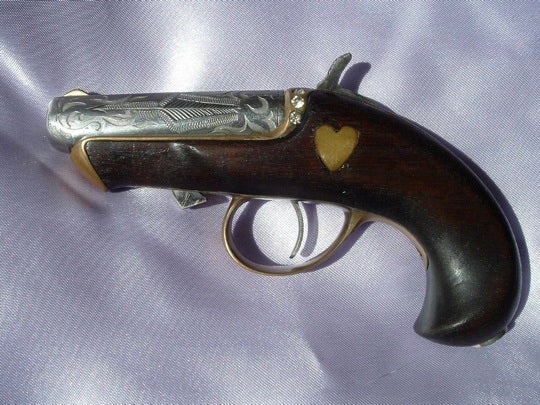
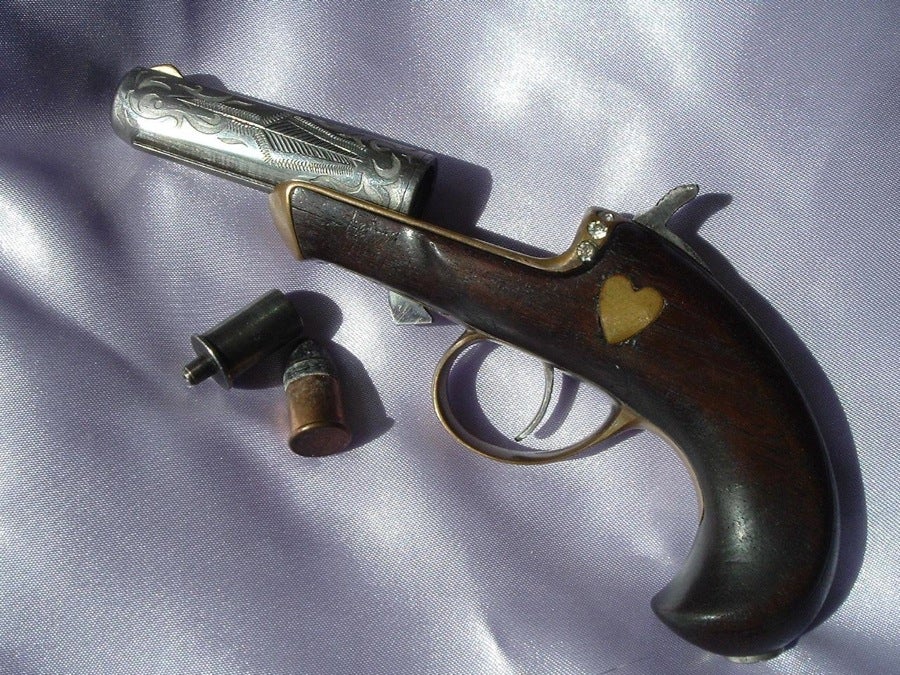
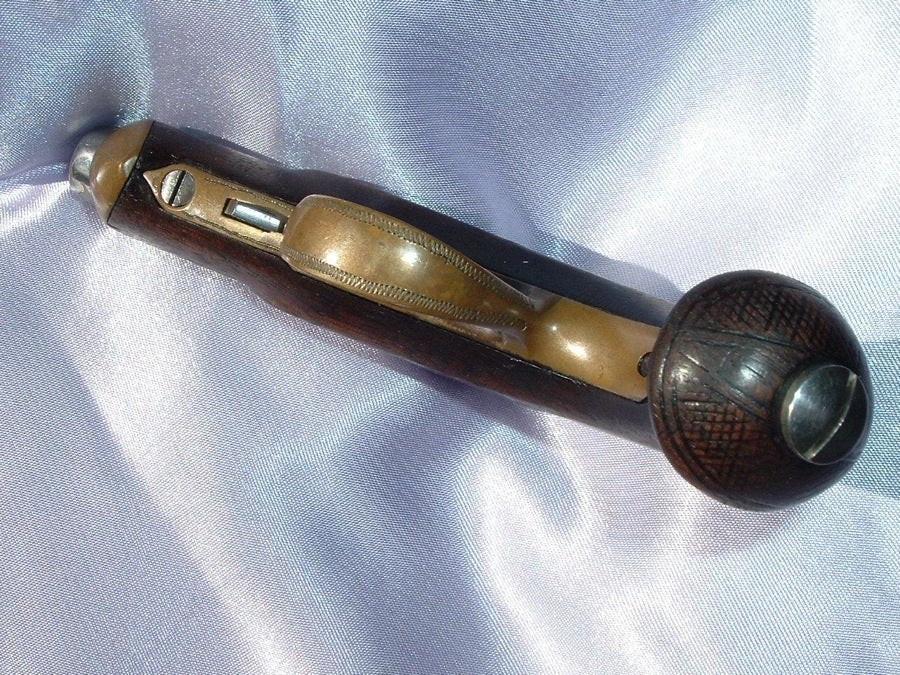
Norm Flayderman’s Guide says that Williamson Derringers have serial numbers running into the 20,000 range but speculates that the Moore Patent Firearms Company / National Arms Company produced fewer than 10,000 of these pistols from 1866 – 1870. The subject of this post has serial number 10621. Perhaps unique to this Williamson are the decorative rhinestones, the heart inlays, and an Ace of Hearts playing card engraved on the backstrap. Further, there is a treaded-plug in the butt of the grip; I have not seen this on any other Williamson Derringer. I would be interested to hear any ideas on what its purpose may be. Someone suggested that it might be for mounting the derringer as a “burglar trap” with the trigger wired to a doorknob.
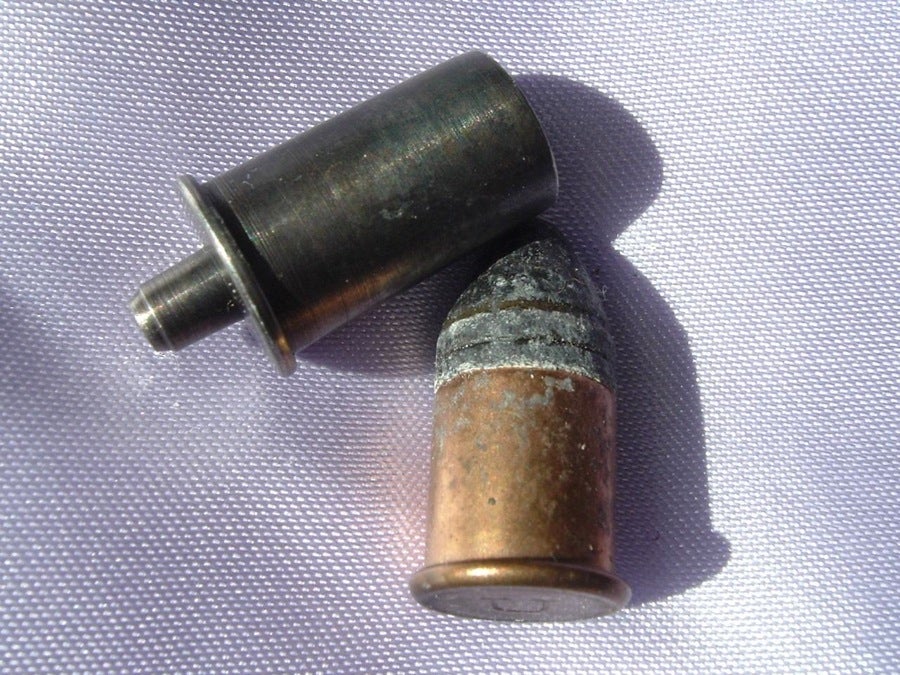
David Williamson’s design adhered to the aesthetic lines of the original Henry Deringer pistols but he decided to fill a niche market created during the period of transition from ball and percussion cap pistols to those designed to fire metallic cartridges; his derringer would be able to function with both. If .41 rimfire cartridges were not readily available, a reusable metal cartridge adapter allowed the use of loose black powder with a lead ball and a percussion cap.
The pistol requires no adjustments to switch between the ball-and-cap adapter and the .41 rimfire cartridge. During rimfire cartridge ignition, as you would expect, the extended blade firing pin on the hammer strikes the rim of a chambered .41 cartridge. When using the cap-and-ball adapter, the flat of the hammer whacks the percussion cap that is on the nipple of the adapter. The cap nipple, which extends into a hole in the breach when the barrel is closed, keeps the hammer from going forward far enough to damage the extended blade firing pin which otherwise would slam against the adapter’s rim.
To load the Williamson Derringer, first pull the hammer back about one quarter of the way until it clicks into its safety position, then push up on the barrel release lever that is on the underside of the pistol (just in front of the trigger guard) and slide the barrel forward. Insert either a .41 rimfire cartridge or the cap-and-ball adapter (after first charging it with ball and powder; it is probably best not to cap the nipple until after the load is in the barrel chamber). Slide the barrel back to the closed position and you are then ready for an 1866 night out on the town.