Concealed Carry Corner: Considerations When Changing Guns

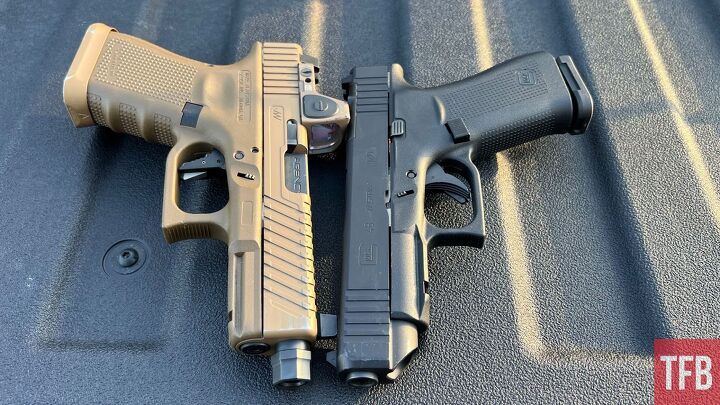
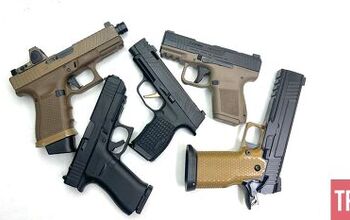
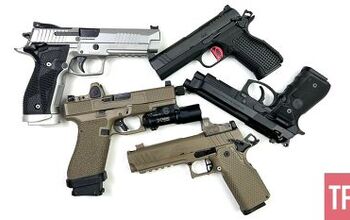
Welcome back to another edition of Concealed Carry Corner. Last week, we talked about how people need to stop carrying so much junk. If you happened to miss that article, be sure to click the link here to check it out. This week, I want to break down the checklist you should go through when thinking about changing carry guns and looking at the reason behind the change. Oftentimes, we will change guns just because we want something new, but in reality, it's much tougher to become proficient with a new gun when you're switching out your carry gun every other week or every month. Let's take a closer look at some considerations when changing guns.

Why Are You Changing Guns?
This can be the trickiest question on the list and there's been more than one instance where I have stopped considering changing out my carry gun because I really didn't have a good reason to change it other than getting something different. For my everyday carry, I will carry a Glock 48 with a Trijicon RMRcc as well as a Shield Arms 15-round magazine. I carry it inside an ANR Design IWB Claw holster and that's my go-to carry gun. I decided to write this article because I have a custom Colt Series 70 1911 being built for formal events that I would love to carry during the colder months, since a full-size gun is easier to carry with coats and layers concealing it.

I started making this Colt as a BBQ gun or a formal event gun. I have started to attend more formal events in the last 3-4 months and really wanted something interesting to carry. The 1911 is one of my favorite guns to shoot at the range, just for the experience and they are incredibly easy to shoot accurately. Of course, the Glock is the definition of reliability and will always go bang no matter what. For formal events, it's fun to have something special to mark the occasion. This won't affect me all the time and I’m not changing carry positions or switching out for everyday, so in this instance, I’m alright with the change and differences.

Holster Choice
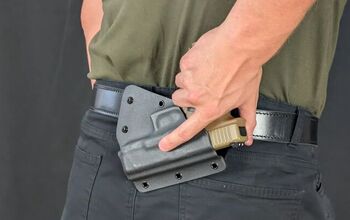
Another aspect that's a fairly big consideration is the type of holster you use compared to other handguns. Consistency is key when it comes to carrying a concealed handgun and although it doesn't always have to be the same gun, if you are able to carry in the same position, the vast majority of your draw stroke remains the same. What really starts to become a problem is if you carry not only different guns but different positions as well. You can either have the same gun in a different position or a different gun in the same position to keep some of the variables the same, but the moment you change everything, is when things become downright confusing. I will typically carry an IWB Claw holster on the strong side of my body.

Basically, for those of you who don't know what that means, it sits on my right hip since I’m right-handed. Others like carrying an appendix, which is perfectly acceptable, but having a full-size handgun up front can start to become uncomfortable when you sit down due to the length. Keeping things as consistent across the board allows you to carry slightly different handguns while using your preexisting knowledge, which will allow you to still draw from concealment quickly, making a new carry gun not as tough to draw.

New Struggles with the Carry Choice
Not all handgunards are built the same and while striker-fired polymer guns are the mainstream choice, there are still DA/SA options as well as different safety mechanisms. My example of switching from a Glock to a 1911 creates a problem for me with drawing and presenting the pistol, since my 1911 will have a manual safety instead of the internal safeties on a Glock. This switch to a manual safety will have to be practiced, drawing from concealment and presenting the firearm while you switch the safety off. It's not an impossible task by any means, but it does take extra reps and practice to make sure you can consistently switch the manual safety off.

Other considerations, like weight and capacity, also come into play since it's an all-metal 45 ACP pistol. You are looking at a weight of 40 oz and a reduced capacity to 8+1, even though it's a larger bullet diameter. Since I own a number of 1911s, it's not such a drastic departure as it may be for others who don't have much experience with a different handgun type. Before switching carry guns, it's always important to look at the positives as well as being honest about the negative aspects, because my example shows there are more than a few negative aspects to consider to see if it's a reasonable swap for special occasions.

Overall Thoughts
The best part of being in the industry is talking about the latest and greatest, as well as showing people the benefits of upgrading. The simple truth is, the more you change out your carry guns, the harder it is to truly be proficient with your carry gun if it gets changed on a monthly or weekly basis. Even if you carry different guns occasionally, having the same carry position allows you to draw with some previous knowledge and muscle memory, even though the actual gun may be different.
What do you guys look at when you think about switching carry guns? Let me know your thoughts in the comments below. If you have questions about carrying concealed or firearms in general, feel free to shoot me a message on Instagram @fridgeoperator. Stay safe out there and we will see you in the next edition of Concealed Carry Corner.
TFB’s Concealed Carry Corner is brought to you by GLOCK

I'm an avid shooter and love educating whether it's at my job or in the shooting community. I'm an average joe that really loves talking with other people about firearms and other passions.I'm active on Instagram on @fridgeoperator.
More by Matt E





![[SHOT 2026] First Shot: SAS Veteran Christian Craighead with Steyr ATC](https://cdn-fastly.thefirearmblog.com/media/2026/01/19/21051/post.jpg?size=350x220)


Comments
Join the conversation
I remember a video of a soldier in Afghanistan who suddenly went for his pistol. His hand went first to his waist, then down to where he was actually carrying the pistol, in a drop-leg holster. That second or so could have been fatal.
That sort of automatic response is why I settled on pocket carry and one pistol decades ago. Down in mild Alabama, heavy layers isn't a problem, though concealment with light warm-weather clothing is. Also, I don't change guns; if I'm betting my life, I don't want to have to fumble with an unfamiliar weapon.
be very careful.
Your Glock has the "safe trigger"... meaning NO thumb safety.
your 1911 has the thumb and grip safety.
I recently went to a class and they had flir guns (no safety)
when I went to practice with my ccw which is a 1911, I "forgot" about the safety during draw and fire (dry fire) at home. THat cost me a second or more!!
This is the most ridiculous article I have read in a long time. It applies to the author and no one else. I rotate between Glock 27, Glock 43X, Glock 29Sig 365, and Beretta 80X Cheetah depending on the season, the weather, the clothing, the location, and the event.