
 Your Privacy Choices
This article has a great comparison between wet and dry suppressors. It also includes some great videos.
The term ‘wet’ means some sort of liquid, be it oil, water, grease, gel or another substance is used to cool the gasses exiting the suppressor. The gas leaving muzzle or suppressor is what causes most of the noise.
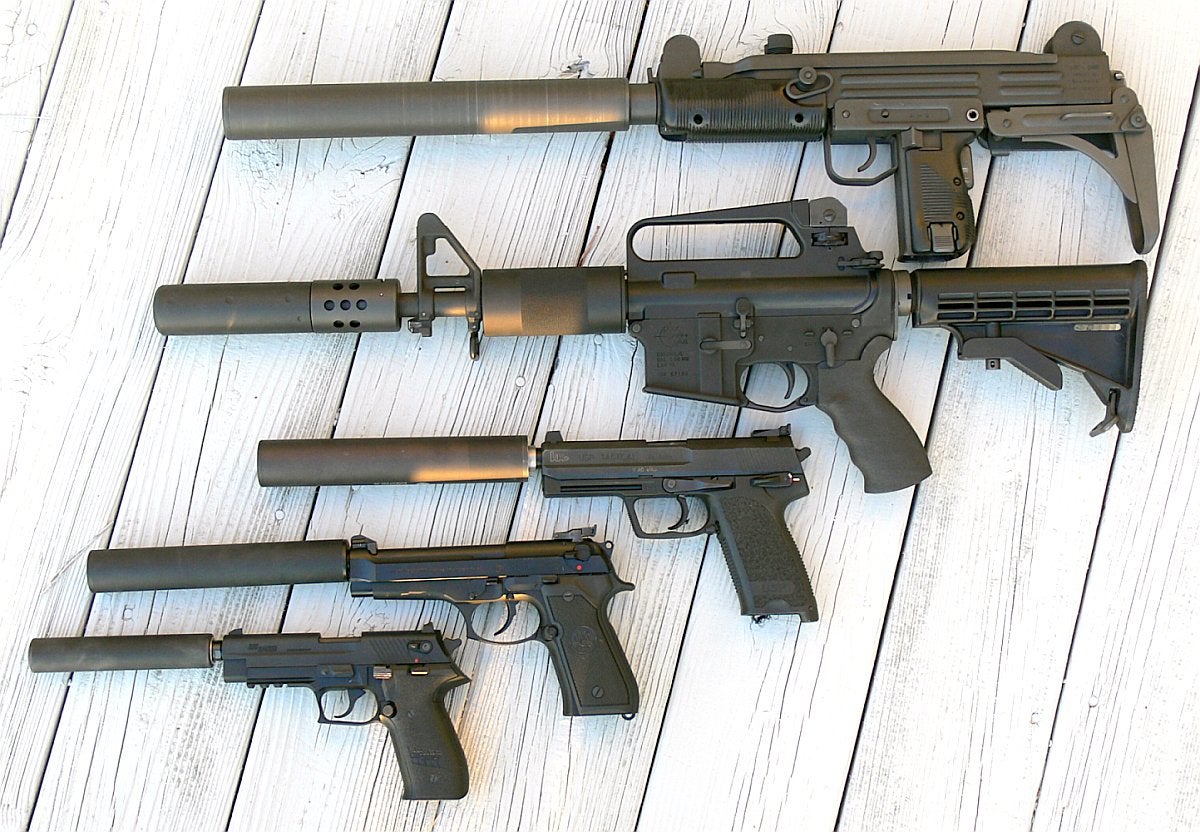
From wikipedia.org:
“Wet” suppressors or “wet cans” use a small quantity of water, oil, grease or water-based wire-pulling lubricant in the expansion chambers to cool the propellant gases and reduce their volume (See ideal gas law). The coolant lasts only a few shots before it must be replenished, but while it lasts it can greatly increase the effectiveness of the suppressor. One manufacturer claims a 30% improvement in sound suppression for “four magazines” (32 to 68 rounds) with the addition of 5 ml (one teaspoon) of water or light oil to their suppressor.
I am a big fan of suppressors and own two. I have a .22LR and a .22 Hornet suppressor. My hornet suppressor can also be used on a .22LR or .22 Magnum (WMR).
In the near future I am going give ultrasound gel a try and see how it works.
Article : Wet vs Dry 22 Silencers
