WOFT: A Unique Approach to Survivability Training

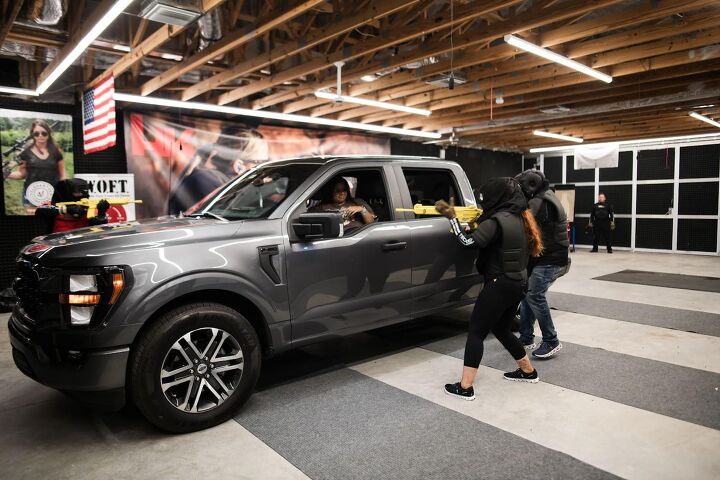
“Where Our Families Train” (WOFT), rebranded from West Orlando Firearms Training, isn’t your typical shooting range or training facility. Some people jokingly call it “Tactical Disneyland,” but that is really not the way to think of it (despite there being some “on-theme” art in one of the immaculate and bougie bathrooms). This isn’t just a playground for wannabe commandos—it’s a carefully designed space where families can learn life-saving skills in a safe and supportive environment.
More WOFT Content @ TFB:
- Inside WOFT: Where Real-World Training Meets Tactical Innovation
- XINSURANCE: Protecting Gun Owners and Firearms Businesses
I recently spent some time observing the training at WOFT (on the dime of XINSURANCE), and let me tell you, this place is different. It’s not flashy marketing or gimmicks that set them apart—it’s the mindset. Safety and education are at the heart of everything they do, and their programs are custom-tailored to fit each individual.
The Story Behind WOFT
WOFT’s founder, Philip Toppino, didn’t come from a military or law enforcement background. He spent years in commercial real estate. As a father, he wanted a place where his family could train together, but he struggled to find one that felt right. Sure, there were options like Frontsight, but nothing hit the mark for him. So, what did he do? He built his own.

For over 15 years now, WOFT has been a family-oriented training ground designed to make firearms and self-defense training accessible, safe, and, yes, even fun. It’s not about turning people into tactical operators—it’s about giving families the skills and confidence to handle challenging situations.
A Unique Training Experience
I’ve taken a lot of courses in my time on the planet—some funded by taxpayers, some during my time with various publications, and some by me. I’ve run a training company for well over a decade. I have had thousands of hours in and around training and nearly every type of instructor. WOFT is different.
The first thing that struck me about WOFT was how personal and adaptable the training felt. Their approach isn’t one-size-fits-all. Instead, every scenario is adjusted based on the student’s experience level and reactions. Philip and his team ask critical questions like, “Can you interrupt an attack process?” or “Can you spot pre-fight indicators before it’s too late?”
What’s even more impressive is the care they put into creating a safe and low-pressure environment (until you are in a scenario), especially for people with no prior training. They understand that ~70% of folks only seek this type of training after something terrible has already happened. WOFT wants to flip that script by preparing students before they are in a crisis.
The training at WOFT is a lot like the training I used to teach in a past version of my life. It was built around adrenaline-stress training (that has tons of research behind it). We currently use this method to teach wilderness medicine in one of my companies. It is one of the fastest and most effective ways to train someone how to react in a crisis. The key is making the scenario as authentic as possible and increasing the stress until the person gets an adrenaline rush. Then, you guide them through a proper response, using either positive or negative reinforcement.
Day One
The first day I was on site, I merely observed–the XINSURANCE people who were scheduled to go through the simulators. Because of the personalized experience, only so many people can go through the simulators simultaneously.
A few training areas can accommodate multiple students, but WOFT still maintains a small instructor-to-student ratio. That is another difference with WOFT–you won’t be in a class with 20-30 other students at varying skill levels soaking up the one or two instructors on the course.
Morning Session: Low-Light Simulator

One of the highlights of my visit was watching students navigate the low-light simulator. The training in this area is primarily based around the employment of a flashlight. WOFT has designed scenarios that mimic real-world situations, from aggressive panhandlers to carjacking attempts to sometimes nothing at all.
For example, one student encountered an attacker with a shock knife (a training tool that delivers a spicy touch if you get hit) hiding near a car. The attacker didn’t respond to the typical “go away,” and things got a little more interesting, which led the instructors to emphasize the importance of strong, clear commands like “Stop!”, engaging with the flashlight, and using things in the environment like the car panic button (to sound the horn and flash the headlamps) that most modern vehicles have.
The cadre even changed the environment—moving trash cans, repositioning bystanders, and tweaking the aggressor’s behavior—to test each student’s ability to observe and adapt. One of the things that gets people into trouble is a lack of awareness of their surroundings. We are all buried in our phones and miss many environmental indicators. Or we get complacent because nothing bad has happened–yet.

Seeing how WOFT uses psychological techniques to help students manage adrenaline spikes was interesting. After stressful scenarios, instructors would take a knee during debriefs to appear less threatening, allowing students to decompress and reflect on what they’d learned. The instructors would also offer helpful tips and strategies for future runs through the scenario.
Most students ran through this simulator until they experienced a heavy adrenaline spike–the scenarios would become progressively more intense until the student reached their capacity to react or got so gassed that nothing meaningful would be taken from future runs.
Afternoon Session: Combatives and Anti-Carjacking Tactics

From there, students moved on to vehicle-related scenarios. These were some of the most eye-opening parts of the day. Whether it was dealing with aggressive panhandlers or outright carjacking attempts, the lessons were clear: pay attention to your surroundings, and don’t let someone invade your personal space.

One tip that was promoted was always leaving enough room to see the rear tires of the car in front of you when stopped at a light. It gives you space to maneuver if things go sideways. Also, it is important to use your horn—it’s one of the simplest ways to draw attention from bystanders and potentially deter a threat.
Day Two
On the second day, I got to run through the training myself. It is one thing just to watch it and another thing entirely to experience it firsthand.
Morning Session: Combatives and Low-Light Simulator
My morning started with close-quarters combative training. We started in the “blade room,” where students practiced Filipino stick-fighting techniques that could be adapted to everyday objects like flashlights, magazines, or even scarves. The goal? Learn how to create space and gain the upper hand before a situation escalates.


My runs through the Low-Light Simulator were interesting. I had some good takeaways from the experience and some good reminders of things I had forgotten.
The simulation we ran through was simple–get safely to your car and enter. That was it. The devil was in the details, though…
One of the observations I noted while watching the previous day was that no one took the time to adjust their car and set it up for optimal security. Simple things like when unlocking the car only unlock the door you are accessing. Most modern cars are set for convenience, so when you unlock with the remote, ALL doors unlock. This allows an adversary to hop in with you, no matter what side of the car they are on.
You are given all the time you need to configure yourself and your vehicle for the scenarios. And you should do this as a matter of course in real life as well. Complacency kills.
Safety is one of the most significant built-in components of the whole WOFT facility and the most important thing when running simuntions. You are wanded and patted down before entering any facility with simulated weapons to ensure lethal problems are not introduced. I was allowed to carry a UTM pistol (the same model I carry), which they provided. I was also given a spare magazine and a fixed blade (blunted and dulled for training) and allowed to configure them how I wanted–i.e. how I everyday carry.
I loaded up and configured the car how I wanted (and how I usually set up my own vehicles).
My first run was simple. No aggressors, no attacks, nothing. I got directly into my vehicle. My second run got slightly more spicy, but it was my own fault. There are several hidey holes throughout the simulator. The scenario started the same way, but when I got in my car, I didn’t hit the lock button immediately, and an aggressor, who appeared out of nowhere, opened the door and lovingly caressed my thigh with a shock knife. Okay….game on.

When I entered for my third run, which was fairly benign, I made sure to do a complete walk around the car and used my light to search the back hatch area, back seats, and floorboards. You can’t be too careful of the WOFT cadre. They are good at finding the gaps in your system and exploiting it.
I had a few more runs in the simulator before my final one. There were a number of different permutations that escalated in intensity, and the only advice I can give is to establish a calm dominance early, use your light, and provide clear, firm directions. Pay attention to your environment, but don’t look scared or panicky. You keep predators at bay by making them wonder if you are too hard of prey for them.
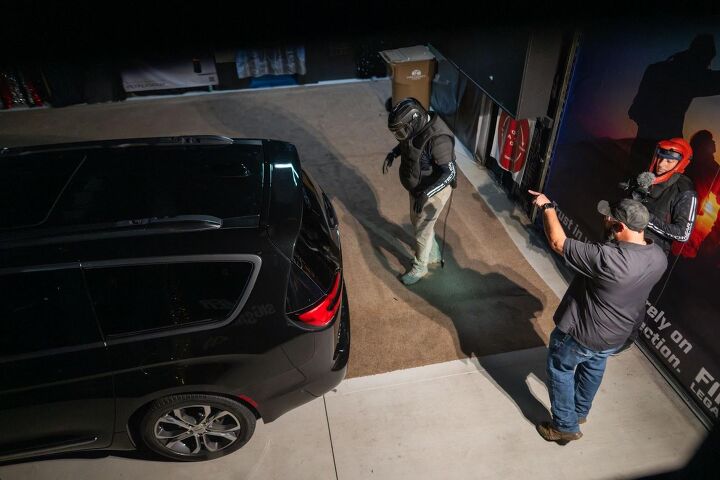
My final run went hard. I entered the simulator to find someone actively trying to break into my vehicle. I did a quick scan with my light as I stepped forward and saw a shape in my peripheral vision–I looked, and it was just a training dummy. What I missed was Erik G launching a very effective ambush and knocking me flat on my ass. It was not my first time in a fight that went to the ground, but my first time with someone who outclassed my skills. I had enough forethought to tie him up in my guard and anchor him close. I had maintained access to my flashlight. I recalled that there was one other possible assailant in the area, so my goal was to make it expensive for the second person to get involved.
Erik felt me try to go for my gun and pinned my arm, so I switched my flashlight to the other hand and tried to go for my knife. He felt that shift and shut that down quickly, too. All I had left was my light, which I proceeded to drive into the back of his head, aiming for the place where his skull met his spine–the bones there are weak. I got a few strikes in, his headgear came off, and the rest of the cadre called the scenario to an end.
It was an excellent scenario, and I had some personal takeaways. It was a good one to end on. You can see a video taken by one of the observers (a student with another group)–I failed to get her name, but she deserves credit for capturing the fight.
Afternoon Session: Firearms Training
I spent my afternoon in the live fire area. We started with a qualification to establish a baseline. The qualification also assigns you a rating, allowing you to carry sim guns in other scenarios. Since my schedule was backward, I did my qualification after running in the Low-Light Simulator.

While qualifying, an instructor watches everything you do, from stance to trigger manipulation to followthrough. There were two of us shooting the qual, and we each had a dedicated instructor.
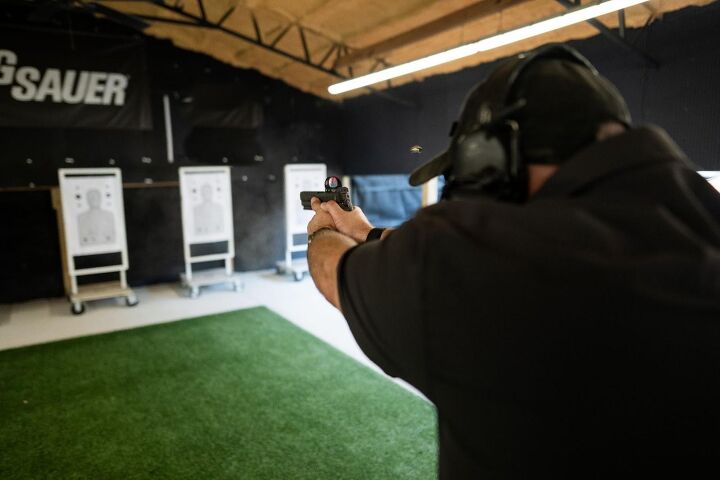
After the shooting, your instructor takes you to a private target and works through skills to fix, refine, and polish anything they noted. I had the opportunity to train one-on-one with Buck Lawler, an outstanding instructor with credentials from SIG SAUER Academy and USCCA. Buck’s mix of technical know-how and laid-back coaching made learning effective and enjoyable.

We mainly worked on my speed, from holster to first shot. My times decreased by nearly half, with almost no loss of accuracy. Some of the tips were taking a more direct path from the holster to getting on target (as opposed to the four-step process I had drilled a few thousand times). Also, do everything except for the shooting fast, which rewards you with extra time to shoot well.
The WOFT Philosophy: Safety, Family, and Preparation
What makes WOFT truly special is its focus on family. The training is designed to be inclusive, encouraging families to learn and grow together. This isn’t just about firearms; it’s about mindset. WOFT teaches students to recognize threats, avoid dangerous situations, and de-escalate conflicts whenever possible.
Philip’s philosophy is simple: preventing a problem is better than solving one. And while the training is undoubtedly serious, it’s also approachable and, dare I say, enjoyable. The instructors are experts and personable, making students feel comfortable even when tackling tough scenarios.
A Hub for the Elite (and Everyone Else)
WOFT’s reputation has attracted some big names. Celebrities like Lena and Jerry Miculek, Daniel Horner, and Grant Cardone trained there. But you don’t have to be famous to benefit from their programs. In fact, WOFT’s 501(c)(3) program invites representatives and public officials to experience the training firsthand, spreading the message of safety and preparedness to a broader audience.
The weekend I was there, a state representative from Florida was in attendance. WOFT does a substantial amount of outreach. People, in general, are scared of the unknown, and education helps mitigate that fear. Whether or not the fear is from firearms or conflict, the best way to get past it is to become better educated.
The Cost of Expertise
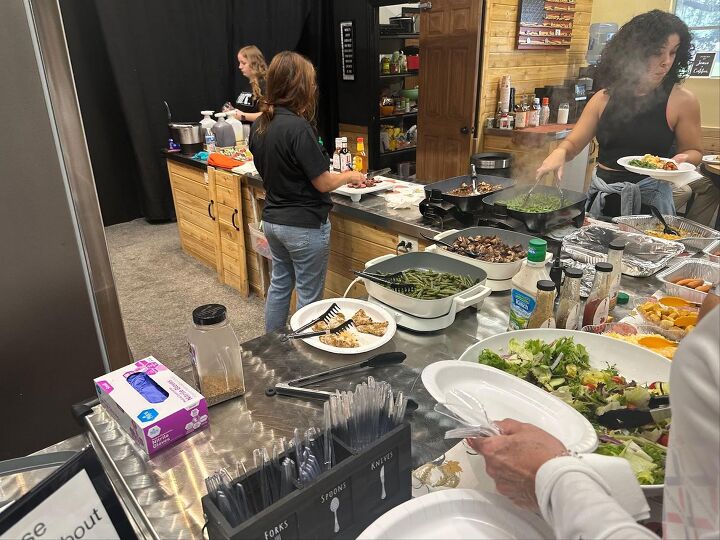
High-quality training doesn’t come cheap, and WOFT is no exception. A single training day can cost $1,750 per person, while a two-day program costs $2,995. The fee includes everything—gear, photos, and even meals. It’s an all-inclusive experience that makes you feel well cared for from start to finish.
Because WOFT prioritizes small class sizes, they can only train about 1,700 people annually. The student-to-instructor ratio is excellent, typically 3:1, and closer to 6:1 during intense scenarios. Every instructor is a subject matter expert, ensuring students get top-notch guidance.

At the very least, purchase a quality EDC flashlight that you can control the brightness on. WOFT sells its branded version, which most students in the class buy after using it through various scenarios.
Final Thoughts
WOFT isn’t just a place to learn how to shoot. It’s a place to build confidence, sharpen your awareness, and develop skills that could one day save your life—or the lives of your loved ones.
The attention to detail, the small class sizes, and the personalized approach make it worth every penny. Whether you’re a complete beginner or someone looking to refine your skills, WOFT offers an experience as educational as it is empowering.
If you’ve been on the fence about taking a class like this, let me be the one to push you off (gently, of course). Training before something terrible happens is one of your best investments—for yourself and your family. WOFT proves that preparation isn’t just practical—it can also be life-changing.
Tom is a former Navy Corpsman that spent some time bumbling around the deserts of Iraq with a Marine Recon unit, kicking in tent flaps and harassing sheep. Prior to that he was a paramedic somewhere in DFW, also doing some Executive Protection work between shifts. Now that those exciting days are behind him, he teaches wilderness medicine and runs an on-demand medical staffing business. He hopes that his posts will help you find solid gear that will survive whatever you can throw at it--he is known (in certain circles) for his curse...ahem, ability...to find the breaking point of anything.You can reach him at tom.r AT thefirearmblog.com or at https://thomasrader.com
More by Tom R







Comments
Join the conversation
$1750 a day? That's some kind of training...