#Selfloader


Firearm Showcase: Mason Experimental 1901 Semiautomatic Rifle at the Cody Firearms Museum - HIGH RES PICS!
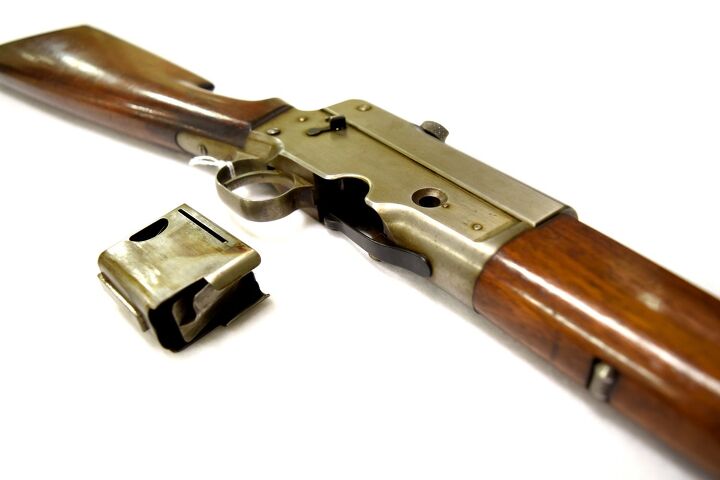
In January, just before the 2017 SHOT Show, I got the opportunity to travel to Cody Wyoming to visit the Cody Firearms Museum at the Buffalo Bill Center of the West, to see some of their rare firearms and bring photos of them to our readers.
Early Selfloading Rifle Mania Continues: The Chauchat C6 Semiautomatic, with Forgotten Weapons
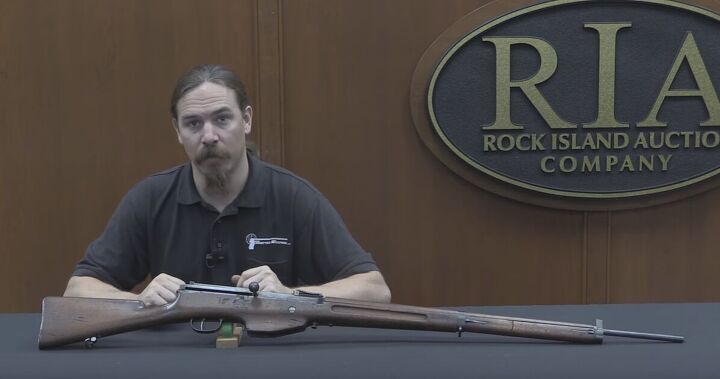
The first nation to begin serious work on the problem of an infantry rifle that could load itself between shots was none other than the then-military superpower of France. In 1886, the French revolutionized the infantry weapon by introducing the smokeless-power, repeating Lebel rifle, and no sooner was the rifle in the hands of the troops, than were French designers and planners figuring out what to replace it with. By 1900, the French autoloader program had been kicked into high gear, with designers Etienne Meunier, Rossignol (first name appears to be lost), and Louis Chauchat, among others, all working towards the goal of a practical selfloading weapon that met the French requirements.
Bloke on the Range RECREATES HISTORY with John D. Pedersen's Cartridge Wax Process

A retarded blowback rifle extracts cases from the chamber while they are still under considerable pressure – over 35,000 PSI. Because of this pressure, the walls of the cartridge cases adhere strongly to the barrel’s chamber walls, while the head is forced back. Under normal circumstances, this would cause a catastrophic case head separation, therefore a successful retarded blowback weapon needs some kind of lubrication to free the case walls from the chamber and facilitate extraction at such high pressures.
The Most Advanced Gun in the World (in 1916): The 1916 Meunier Carbine

Beginning in the last decade of the 19th Century, the French government began work on the next great advancement in infantry small arms technology: The selfloading rifle. By 1916, after the outbreak of World War I, they had produced what many consider the most advanced rifle of its time: The Meunier A6 Carbine.
Hope You're Not Sick of Toggles Just Yet: A Look at Japanese Toggle-Action Rifles

Is it Toggle Month, or what? Readers of TFB have so far been treated to several posts in April on the famous toggle-locked Luger pistol, but the fun’s not over yet! In the 1930s, the Japanese were – like many major powers at the time – looking to replace their bolt-action Type 38 rifles with more modern selfloading weapons. During this time, John Pedersen, designer of the toggle-retarded blowback Pedersen rifle series, traveled to the islands to demonstrate his design to Japanese Army officials. Pedersen did not successfully sell his rifle anywhere ( despite it being a world-class design), but Japanese arms manufacturers could not quite let go of Pedersen’s ideas. Ian McCollum of the Forgotten Weapons YouTube channel takes a look at two such rifles designed and manufactured by Japanese companies, but based on Pedersen’s excellent rifle. These are the Tokyo Gas & Electric rifle, and the Nippon Special Steel rifle, videos on both being embedded in that order below:
The CZ Model S Early Selfloading Rifle

Well, it’s no secret that I am a sucker for early selfloading rifles. The sheer number of ideas that were being explored in the early decades when these rifles were undergoing military trials creates a fascinating body of work for us gun nerds in the modern day to study. One area that doesn’t get enough attention is the developments of gun designers in Central Europe before World War II. We previously posted on the ZH-29, one of the most important milestones in the story of the military selfloading rifle, but today we’ll take a look at a video released by Forgotten Weapons on another rifle designed by the same talented designer, Emmanuel Holek. That rifle is the CZ Model S:
The Browning 1921 Autoloading Rifle: A Forgotten Weapon of War
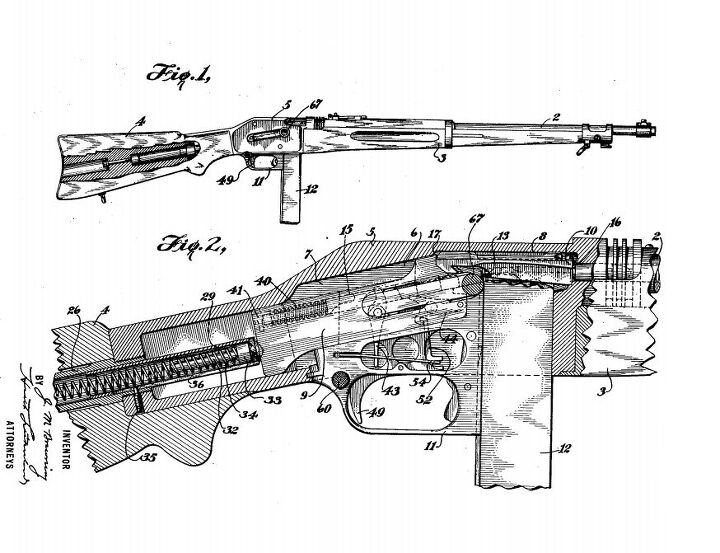
Some of John Browning’s contributions to the effort of the First World War – like the M1918 Browning Automatic Rifle and the M1917 Browning Machine Gun – are well-known, but there’s one that never made it to production, or even any substantial degree of recognition: A Browning infantry rifle design, utilizing a totally unique hesitation locked mechanism.
Paul Mauser's Selfloading Rifle – The Worst Sporterization Ever? Maybe Not…

Paul Mauser, the person who with his brother was chiefly responsible for the excellent line of Mauser bolt-action rifles that even today are the pattern for almost all modern bolt-action designs, lost an eye in 1901 during testing of a self-loading rifle which had an inadequate locking mechanism. Mauser had been working on perfecting a military self-loading rifle for about three years at that point, going through many different variations and prototypes in his race to create the first viable military self-loading infantry rifle. The rifle Ian of Forgotten Weapons takes a look at in the video embedded below is not that rifle that cost Mauser his eye, but the rifle that Mauser designed in 1902 upon his recuperation and return to the problem. The prototype in the video is No. 4, and Mauser – undeterred by the loss of a mere eye – kept at the problem until he died in 1914, producing nearly 20 prototypes:
To Challenge A Newly Won Throne: The Rise And Fall of The Light Rifle, Part II

This is the second part of a series of posts seeking to describe and analyze the 7.62mm Light Rifle concept promoted by the Americans, and subsequently adopted by NATO in various forms. This series will cover development from before World War II to the present day, but will focus primarily on the period from 1944-1970, which constitutes the span of time from the Light Rifle’s conception until its end in the United States with the standardization of the M16.
The Ambitious Origins of Short-Recoil Operation At Forgotten Weapons

Now that all the guns of Ian’s educational videos have been auctioned off, it is time for a more traditional Forgotten Weapons post, of the kind he’s been doing for several years now. The subject of his latest is the Mannlicher 1885 self-loading rifle, an extremely special example of a semiautomatic hand weapon designed around blackpowder cartridges. Without some practical experience with blackpowder weapons, the ambition of Mannlicher’s goal cannot be fully understood; blackpowder is a nasty, corrosive substance that fouls even simple single-shot weapons to the point of hopeless inaccuracy and uselessness without regular cleaning and attention. To attempt to design a practical self-loading weapon is approaching an exercise in total futility, but it was a challenge that Ferdinand von Mannlicher felt he was nevertheless up to:
The Guns of The Bay of Pigs Invasion

Fifty-four years ago plus five days, nearly thirteen hundred troops of the paramilitary Cuban exile group Brigade 2506 landed in Cuba, in an attempt to overthrow the Communist Cuban government, led by Fidel Castro. Sponsored by the CIA, the Brigade was armed with a motley of weapons, many ex-US military examples left over from World War II. Historical Firearms has posted to their Facebook page an album of photographs showing a cross-section of the weapons used by both the Brigadiers and the Communist forces.
The ZH-29 Selfloading Rifle: A Forgotten Turning Point

The Czech Republic has always been a nation that hits above its weight in the small arms field. Despite being a relatively small country with a somewhat checkered history, it has consistently put out high quality, innovative firearms that compete very well with those offered by much larger and older nations. For having risen from the ashes of the shattered Austro-Hungarian Empire, the Czechs have done quite well.
Eight Reasons Selfloading Rifles Had To Wait For John Garand

With the introduction of the successful metallic cartridge in the 1840s, an explosion of innovation directed towards rapid-firing infantry weapons rocked the world. The culmination of this would be the mass-produced self-loading rifle, realized with the adoption of the Garand in 1933, its standardization in 1936, and eventually its mass production after 1939. However, the Garand was far from the first self-loader ever devised; many know of the Mexican-Swiss Mondragon rifle, but even earlier than that were the Cei-Rigotti of 1898, the STA series of rifles from France beginning in 1896, and the Madsen-Rasmussen of 1888, to name a few. Many of these early rifles worked fairly well, even; the Madsen-Rasmussen, Mondragon , RSC 1917, Mauser Selbstlader, and several other weapons were successful enough to be adopted in some capacity by military forces. Why, then, did the world have to wait until the late 1930s to finally realize the standard-issue selfloading rifle?