A Beginner Tries NRL Hunter, Part 2: Match Day 1


Welcome back to the next instalment in the “A Beginner Tries NRL Hunter” series. The last article focused on the match description and our efforts to get ready. This article will cover arriving at the match and the first day of competition, hopefully giving you a flavor of what to expect if you wanted to give the competition a try. If you missed the first part, catch up here.
Competition Shooting @ TFB:
- Self Defense versus Competition Shooting
- TFB Review: Nightforce 4.5x Competition Service Rifle Scope
- My First Pistol Match: CMP Excellence In Competition .22LR and Service Pistol
- Getting Started in CMP Service Rifle Competition
Arrival & Check-In
We arrived in Vernal, Utah, on schedule and headed straight to the range. Sign-in and other administrative tasks were front-loaded to Friday so that Saturday and Sunday could be spent on shooting. Our first order of business was getting checked in. We filled out liability waivers, got our gift bags, signed up for our squadding, and had our rifles weighed. Each rifle had to weigh in under 16 pounds with any affixed accessories, except for slings and magazines. My Scout was only 10 pounds 11 ounces with the sling and magazines, so I had plenty of weight to spare.
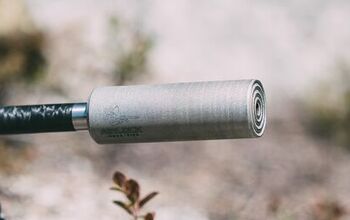
My brother Barrett was shooting a Seekins HIT in 6.5 Creedmoor with a Leupold Mk5HD scope. His gun weighed in just under 16 pounds, which was a relief because there had been some drama with the weight of his setup. After switching around scope rings, bipods, Arca plates, and such, he had to make a choice: take a good bipod and no suppressor, or a not-so-good bipod and a silencer. Because this was a team match where we would spot for each other and work together, it made sense to opt for the suppressor.
Once the guns passed the weight check, we each received some yellow zip ties to attach to the gun, scope, and bipod, showing that they were legal. I spent a few minutes trying to decide how to put one on the Scout bipod, which is an integral part of the handguard, and eventually gave up. Marking the scope and gun would be good enough, and if anyone had a question, they were welcome to weigh the gun again.

After the sign-in tent, we headed down to the range to check zeroes and check our power factor. NRL Hunter measures the average velocity of three shots and multiplies it by the grain weight of the bullet. The minimum PF is 380,000. So a 140-grain bullet (a common 6.5mm weight) at 2715 FPS would just barely be legal. This keeps the hot little 6mm gamer cartridges out of the competition and incentivizes loadings that are more normal in the hunting world. One fun wrinkle of the team category is that the highest PF for the team is the one recorded, and that is the tiebreaker should one be needed. My Scout shooting 168-grain Hornady bullets at just over 2600 FPS gave us a PF of something like 430,000, so we were very safe.
The actual zeroing targets were a little chaotic, but we managed to check our dope on some steel targets out in the distance. This is one point that could be improved in future years. Everyone was shooting at one board covered in little orange target stickers, and it was impossible to tell what was going on. A better zeroing range is one area that the match could improve for next year, though things like zeroes should be set and rechecked long before the match.


We left the range and headed back to town. After a great Mexican meal at El Sombrero (in an old gas station converted to a restaurant with the drinks all stored in the glass-doored refrigerators), we headed back to the hotel and prepped our gear. My packing list for my backpack included:
- Gloves
- GoPro cameras
- Water bottle
- First aid kit
- Blue tape & Sharpie markers
- Small notebook & pen
- Sandbag
- Hat
- Over-ear hearing protection
- Spare earplugs (not pictured)
- Ammo carrier
- Rain gear
- Snacks (not pictured, they were in the fridge to help them not melt)
I would carry my rifle with a loaded magazine stored in the stock compartment. In my Sitka binocular harness, I carried two more 5-round Scout magazines, a pair of Vortex Diamondback HD binos, and a Sig Kilo laser rangefinder. The RRS tripod would slip over a strap on my backpack for movement between stages, but I would slip it over my bino harness so it was quickly accessible when we were on the clock.

The Match Begins
Early the next morning, we got up, got dressed, and headed to the range. The parking lot was filled with excited shooters prepping equipment and talking with one another. Everyone gathered up for the safety briefing, and an opening shot was fired by young Bechkam Hatch. He is facing some serious health challenges, and there was a side match to raise money for him and his family. His cold bore shot on a Tannerite-filled toy dinosaur started the match off on a high note, and we all headed to our first stages.


There were 20 squads and 20 stages, each squad starting on the corresponding stage number. The shooters of each squad decided on the order they shot in. Each stage had a rack to hold the rifles and a small sign that gave an overview of the stage. That sign said how many targets there were, what shape they were, how many firing positions, and if the stage was shot near to far or left to right.
Because the stages are shot blind, the squad would stay down behind the hill while waiting. One shooter would be on deck and ready to roll while one shooter ran the stage. The RO running the stage would brief the shooters on the point where the time would start and would ask if they understood the course of fire, and after that, it was time to go.
Our first stage was one target, a ram, engaged from four positions. We moved up to the line and the time started. To our credit it was not a total yard sale of gear thrown all over the place, we got set up and on glass in a respectable amount of time. But then the struggle began.

Each stage has a viewing position where all of the targets are visible. The binoculars usually get set up on a tripod over one orange marker. In front of that marker are two stakes that mark the left and right limits for the viewing area. All targets are visible within the zone. Within the viewing zone is a placard with the stage number and the first target will be in the vicinity of that placard. At this match, there were usually targets from several stages visible from any one stage, so finding the correct placard was critical.

After a false start with the wrong placard, we found the right one, but still struggled to find the actual target. It was lurking down in front of a sagebrush, and the low angle of the early morning light made it very tough to pick out. But once we had that target located, we ranged it at 451 yards and started getting ready to shoot.
My brother Barrett shot first because this was not his first NRL Hunter match, and I wanted to observe before having my first at-bat. The four shooting positions were along some rocks. As my teammate worked through the positions, I was spotting and seeing some confusing feedback. Rounds were going both high and low with the same hold, and one round seemed like it went through the target. Barrett did score a few hits, but we ran out of time before I got to shoot.


The first big lesson of the day was time management. Six minutes sounds like a long time, but it flies by when the clock is running in an actual match. We would need to work on our efficiency in the coming stages.
Between the stages, there was a rush to reload magazines, write down the info for the upcoming stage on our “arm boards” and grab a drink of water. I did not have a real armboard but used painter’s tape on my arm. I also kept a small logbook where I wrote down each stage and some notes on our performance. Highpower shooters are always writing info in their data books, and it felt wrong not to do that here as well.
Many stages moved quickly, with only just enough time to get prepped before it was time to shoot again. But every once in a while, there would be a logjam at a stage, and there would be a substantial wait. That was time to eat a snack, clean the fine moon dust that built up on scope lenses, and reapply sunscreen. Thankfully, those stages were the exception rather than the rule.


After a few stages, I realized that on each stage’s info sheet, the picture of the target was the actual shape of the target. A popper would be an identical popper, a squirrel would be an identical squirrel, and so forth. On that first stage with the ram’s head target, I thought the image was symbolic. My brain interpreted the deeply shadowed target as the full body of a ram rather than just the head as shown on the stage briefing. At least one of those shots that looked like it went through the target probably did, given the gaps around the horns on that target. Second big lesson of the day: The picture on the stage description sign was actually what the target was shaped like!

Finding Our Stride
With each stage, we learned lessons and started to improve. Our setups got a little smoother. We were faster at finding the targets and setting up firing positions. One thing that made a difference with the later stages was improving our time management. For example, the rules state that the bipod must be “stowed” when approaching a stage. But the rules do not say the bipod has to be completely put away. I started leaving the bipod legs unlatched on the Scout but folded back against the forearm. I still had to pull them out before I could ground the gun, but it was a faster operation that took less concentration, so I could be looking downrange for placards while I was ditching my gun.
I also started preparing my scope while on deck for the next stage. The scope caps were open, the magnification was backed off so there was a wide field of view, and I dialed the parallax back to 200 yards or so. We would turn our hats backward, put away our sunglasses, and do everything possible to save time on the stage. We jokingly started referring to this as “ Sport Mode” in reference to a meme.

Another thing that started to really click was sharing equipment. Most NRL Hunter competitors are solo shooters, each responsible for all their own gear. But in the team category, the shooters can share equipment other than guns. For example, we would set up two sets of binoculars on tripods while locating the targets. On a stage with multiple targets, we would leave one set of binos pointed at one group of targets and the other set pointed at the remaining targets. It was much easier for the spotter to hop between those observation setups than switch back and forth with one pair of binoculars.
Something similar also happened with the supports used at each firing position. If one needed a sandbag and the other needed a tripod, the first shooter would leave the firing points set up to the extent possible so the second shooter could just use the equipment that was already in place.
One stage where it all seemed to click was all fired from a pickup truck. There were four positions to engage one target at about 385 yards. After a little struggle to find the partially obstructed placard, we started shooting. I shot first on this stage and managed to get four first-round hits for a total of eight points, my first clean run on a stage. My brother shot similarly well, only dropping two points for a stage total of 14/16. Some of our success may be attributable to having shot on, from, within, over, and around vehicles quite a lot in our youth, but time management and clear communication came into play in this stage.

After the truck stage, one of the ROs recognized the Steyr Scout I was using, and he took a turn to shoot it. Lunch was provided: a BBQ sandwich, chips, a cookie, and Gatorade. That was a nice little break before the last few stages.


Those last few stages went well, but not great. At the end of Day 1, we had managed to score at least some points on every stage. But we also had major issues with one gun and one scope. We will see you back here for another instalment coming soon.
AKA @fromtheguncounter on Instagram. Gun nerd, reloader, attorney, and mediocre hunter.
More by Daniel Y




![[SHOT 2026] Getting a Grip on the Glock 43 & 48 with Grit Grip](https://cdn-fastly.thefirearmblog.com/media/2026/01/20/02202/post.jpg?size=350x220)




Comments
Join the conversation
And the cycle of shooting games continues to turn. It's funny because you have whole groups of people that will die on the hill of "a hunting rifle isn't good for long range competition" yet they're the same folks that find it perfectly acceptable as long as you're not hunting actual animals and only pretending to in the context of a game. The proverbial moving target, if you will.
Another "hunting" venue becomes an equipment arms race. I have hunted on 4 continents, and have never seen anyone hunting with a 16 lb. rifle.