
Revolver and the .45 GAP
Caleb spotted a fellow IDPA competitor using .45 GAP cartridges in a revolver! I had never heard of such a thing before.
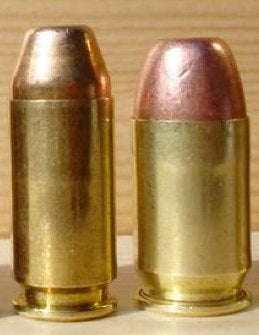
The .45 GAP (Glock Auto Pistol) was designed to duplicate the .45 ACP ballistics but in a shorter cartridge more suited to high capacity semi automatics. It is the last thing I would have thought of using in a revolver, but the owner of the wheelgun had some good reasons.
We did make a .45 acp and .45 colt revolver during WWII. It required the use of half moon clips for extraction of .45 acp brass. Early versions needed half moon clips to fire .45 acp later ones required a pencil or other rod to push .45 acp brass out if half moon clips were not used.
Have you seen the prices on 45 GAP ammunition? Ouch!! It’s a cool round, but the ammunition is expensive to shoot and often difficult to find.
Heath, yep, thats why I would not buy a .45 gap pistol.
Generally speaking, the farther the bullet has to jump from the revolver’s chamber to the barrel’s forcing cone, the less accurate the cartridge will be.
But, if you really want a shorter cartridge you can either: 1) seat the bullet deeper in the case (adjusting load accordingly); or 2) trim your .45 acp brass shorter. Solution #1 is already being used by many cowboy action shooters who are using .45 LC with very light powder loads and the bullets seated very deep in the case.
The author also suggests that small pistol primers are easier to ignite. Hmmm, I’m not so sure about that. What IS a fact is that Federal primers are easier to ignite than CCI and some other brand. Many single action shooters have their hammers tuned very light. They can shoot Federals. With other primer brands the primers won’t go of.
In general, the .45 GAP was a solution in search of a problem. I suggest sticking to the .45 ACP for revolvers. With beveled chambers and moon clips you’ll be able to load plenty fast.