
Goodbye Picatinny, Hello NATO Accessory Rail

MIL-STD 1913 aka. the Picatinny rail attachment system, is will eventually be replaced by STANAG 4694, otherwise known as the NATO Accessory Rail (NAR). On May 8 the powers-that-be at the NATO Standardisation Agency approved the new standard, which will now need to be ratified by individual NATO member countries.
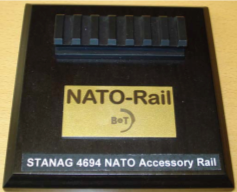
picture 2 19 tm Goodbye Picatinny, Hello NATO Accessory Rail photo

Don’t get worried about your countless picatinny compatible attachments being obsolete, the system is fully compatible with picatinny compatible accessories. According to DTIC.mil (PDF link) the differences between the MIL-STD 1913 and the NAR are:

* Metric reference drawing (see below).
* Additional measurements and tolerances.
* Adjustments of some measurements.
* Reduction of straightness tolerances (presumably making the manufacture cheaper).

picture 3 28 tm Goodbye Picatinny, Hello NATO Accessory Rail photo
NAR Reference Drawing.

Another notable change is the recommendation that while in the picatinny system the V-angles are used for the alignment and reference of the accessory, such as detachable optics, NATO recommends using the top surface instead. They say that tests have shown that this increases repeatable alignment.
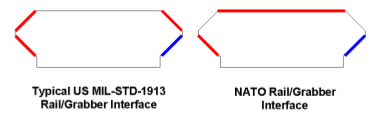
picture 5 30 tm Goodbye Picatinny, Hello NATO Accessory Rail photo
Recommended surfaces to use for alignment.

According to Janes many countries contributes to the new standard, including many of the top military arms manufacturers:

Designed in conjunction with a number of weapon specialists including Aimpoint, Beretta, Colt Canada, FN Herstal and Heckler & Koch, the NAR system has full compatibility with current US MIL-STD-1913 specifications, also known as the Picatinny rail.

It will be interesting to see how long it takes before civilian arms claim “STANAG compatible rails”.

A big thank you to jesse for emailing me about the new system.

UPDATE: Mark posted a link to another DTIC.mil (PDF warning) presentation that discusses the future developments of the NAR.

NATO members are currently working on working on a powered rail design that extends STANAG 4694. The idea is to have a single battery to power all the accessories and optics of the firearm.

picture 2 20 tm Goodbye Picatinny, Hello NATO Accessory Rail photo
Battery in the pistol grip, power management in fore grip

I have blogged about powered picatinny rails before.

Related Posts

16 Responses to “Goodbye Picatinny, Hello NATO Accessory Rail”

Sort The Responses Below: Most Recent | Highest Rated
  1. Markwrote on October 14th, 2009 at 2:05 am Link To Comment | Reply To Comment

    After looking through my old collection of documents I found this pdf about a KAC mount with the same characteristics:

    http://www.abload.de/img/kac-railp6f2.png

    http://web.archive.org/web/20031224145154/www.dtic.mil/ndia/arms/sod.pdf

    Page 21

    From the Small Arms Systems Section Annual Conference, Exhibition and Firing Demonstration, 1998. Title of the presentation was “Improved Night/Day Fire-Control/Observation Device (INOD)”

    Please rate this comment: Thumb up 0 Thumb down 0
    • Steveresponded to Mark on October 14th, 2009 at 8:42 am Link To Comment | Reply To Comment

      Mark, very interesting. Thanks. I wonder if KAC patented it (and agreed to drop the patents).

      Please rate this comment: Thumb up 0 Thumb down 0
  2. Mark Deroswrote on June 20th, 2009 at 4:20 pm Link To Comment | Reply To Comment

    there is only one Picatinny locking product line available that was already established with the new NATO specs prior to this release.

    Alamo Four Star released their locking system that does not damage or distort the picatinny rail unlike some other manufactures.

    It’s called DLOC

    http://www.alamofourstar.com

    Please rate this comment: Thumb up 0 Thumb down 0
  3. TenXwrote on June 17th, 2009 at 4:13 am Link To Comment | Reply To Comment

    @ Claude: “I don’t understand why “reduction of straightness tolerances” is an improvement, though.” Mr. Ortmann is correct “Reduction of straightness tolerances” in this case means tightening the tolerances, thus a good thing.

    @ Mark: There are many of 10′s of 10^3′s of very expensive optics in the inventory that would be unusable an a 3-sided dovetail. There is virtue in keeping the four sided scheme for backward compatibility.

    Straightness, especially in the horizontal pane (Yaw) is important. You have all probably seen pics of a zero power red dot sight looking though a either a NV optic or a magnifying optic. if the rail had a bow in it the aimpoint of the red dot would be shifted by the additional optics. Straightness in the vertical plane (Pitch) would also be affected, but would be easier to mentally adjust for.

    TenX out

    Please rate this comment: Thumb up 0 Thumb down 0
  4. David S.wrote on June 16th, 2009 at 12:57 pm Link To Comment | Reply To Comment

    Powered picatinny rails remind me of the powered “sound and light” legos when I was growing up in the 80s. You have lego pieces that connect to conductors feeding from a main battery compartment. I’m smelling a lawsuit.

    Please rate this comment: Thumb up 0 Thumb down 0
    • Steveresponded to David S. on June 16th, 2009 at 1:00 pm Link To Comment | Reply To Comment

      David, HA! You are so right. I remember those, they were pretty nifty. They may even still use them with that lego midstorm robot building stuff.

      Still, if they were around in the 80′s the patents would have expired.

      Please rate this comment: Thumb up 0 Thumb down 0
  5. Kenwrote on June 16th, 2009 at 9:34 am Link To Comment | Reply To Comment

    Being a Machinist of 16 years I can tell you this, giving a part tolerances that are needlessly “tight”, increases cost per part and in some cases is overkill. Im guessing that the rail bows when machined. Also to wit that many screws hold the rail to the upper receiver. So basically the “bow” will go away when the part is installed. So no extra steps should be needed to make sure the part is “uber flat” prior to install. This is a partial drawing up top so I cant comment to much more…

    Please rate this comment: Thumb up 0 Thumb down 0
  6. Freiheitwrote on June 16th, 2009 at 6:38 am Link To Comment | Reply To Comment

    Manufacturing tolerances for shape shouldn’t affect the rezeroing as long as the rail itself doesn’t change shape between removing the optic and reinstalling it.

    For example you could install and zero a scope on a rail thats mounted 10-degrees crooked and reinstall it on the same rail and it *should* be zeroed still.

    If the shape or alignment of the rail changes, then you’re going to lose zero no matter how tight the tolerances.

    Mark – Too bad they have to keep those unmarked surfaces for backwards compatibility. Coming from the software world, keeping backwards-compat is a bitch. You can either get rid of it and piss off customers or you can keep it and piss off your engineers!

    Steve – I agree with Sven. Reducing tolerances generally means that things must be made closer to spec. This would generally increase production costs, if for no reason other than rejected pieces. Please clarifiy!!!

    Please rate this comment: Thumb up 0 Thumb down 0
  7. Markwrote on June 16th, 2009 at 6:33 am Link To Comment | Reply To Comment

    Document about the “Powered NATO Rail”.

    http://www.dtic.mil/ndia/2009infantrysmallarms/wednesdaysessionvTorbjoern.pdf

    Please rate this comment: Thumb up 0 Thumb down 0
  8. subbywrote on June 16th, 2009 at 5:12 am Link To Comment | Reply To Comment

    thats the only reason they are changing the standard in the first place. the inability of picatinny to hold zeroe after removing an optic and putting it back on.

    Its irrelevant how they do it, just that it gets done.

    Please rate this comment: Thumb up 0 Thumb down 0
  9. Matt Groomwrote on June 16th, 2009 at 4:26 am Link To Comment | Reply To Comment

    I’m pretty sure the Picatinny rail was not adopted in 1913, so it’s not almost 100 years old. It was designed in the early 80′s for the Colt ACR project, with the final version of the design being made by Dick Swan, founder of A.R.M.S., and being approved by Colt, who incorporated the rail into a new forging for what became the M4 Carbine. The design was approved by the Picatinny Arsenal, they gave it the Mil-Std of 1913, in order, not by year. The US dropped the year designation thing around WWII, since so many things were invented and adopted in the same year.

    What I wonder is, did Richard Swan have any input in the change to his design? This is just bureaucrats being bureaucratic. Bunch of pains in the ass. This is less an improvement and more of a resume padding activity.

    Please rate this comment: Thumb up 0 Thumb down 0
  10. Markwrote on June 16th, 2009 at 3:26 am Link To Comment | Reply To Comment

    Funny, with the new alignment recommendation the two unmarked surfaces are for the birds. A normal “dovetail-rail” would be cheaper and would do the same job.

    Please rate this comment: Thumb up 0 Thumb down 0
  11. Sven Ortmannwrote on June 16th, 2009 at 1:50 am Link To Comment | Reply To Comment

    That is strange.
    I heard that the next rail standard was meant to include integral power lines if not even data connections.

    —————————
    A “reduction” of a tolerance means a more accurate production if I read that correctly.
    Large tolerance = loose, no tolerance=no measurable variations.

    I think they should use two tolerance standards – and simply use the otherwise wasted production parts for the lower tolerance spec. A searchlight or fore grip doesn’t need the same accuracy as a scope.

    Please rate this comment: Thumb up 0 Thumb down 0
  12. Jay.Macwrote on June 16th, 2009 at 1:16 am Link To Comment | Reply To Comment

    Yep, reduced tolerances in manufacturing is never a good sign- particularly where optics are concerned.

    Please rate this comment: Thumb up 0 Thumb down 0
  13. Claudewrote on June 16th, 2009 at 12:30 am Link To Comment | Reply To Comment

    So , after almost 100 years the Picatinny rail still rules!

    I don’t understand why “reduction of straightness tolerances” is an improvement, though.

    Please rate this comment: Thumb up 0 Thumb down 0
  1. David S.wrote on June 16th, 2009 at 12:57 pm Link To Comment | Reply To Comment

    Powered picatinny rails remind me of the powered “sound and light” legos when I was growing up in the 80s. You have lego pieces that connect to conductors feeding from a main battery compartment. I’m smelling a lawsuit.

    Please rate this comment: Thumb up 0 Thumb down 0
    • Steveresponded to David S. on June 16th, 2009 at 1:00 pm Link To Comment | Reply To Comment

      David, HA! You are so right. I remember those, they were pretty nifty. They may even still use them with that lego midstorm robot building stuff.

      Still, if they were around in the 80′s the patents would have expired.

      Please rate this comment: Thumb up 0 Thumb down 0
  2. TenXwrote on June 17th, 2009 at 4:13 am Link To Comment | Reply To Comment

    @ Claude: “I don’t understand why “reduction of straightness tolerances” is an improvement, though.” Mr. Ortmann is correct “Reduction of straightness tolerances” in this case means tightening the tolerances, thus a good thing.

    @ Mark: There are many of 10′s of 10^3′s of very expensive optics in the inventory that would be unusable an a 3-sided dovetail. There is virtue in keeping the four sided scheme for backward compatibility.

    Straightness, especially in the horizontal pane (Yaw) is important. You have all probably seen pics of a zero power red dot sight looking though a either a NV optic or a magnifying optic. if the rail had a bow in it the aimpoint of the red dot would be shifted by the additional optics. Straightness in the vertical plane (Pitch) would also be affected, but would be easier to mentally adjust for.

    TenX out

    Please rate this comment: Thumb up 0 Thumb down 0
  3. Mark Deroswrote on June 20th, 2009 at 4:20 pm Link To Comment | Reply To Comment

    there is only one Picatinny locking product line available that was already established with the new NATO specs prior to this release.

    Alamo Four Star released their locking system that does not damage or distort the picatinny rail unlike some other manufactures.

    It’s called DLOC

    http://www.alamofourstar.com

    Please rate this comment: Thumb up 0 Thumb down 0
  4. Markwrote on October 14th, 2009 at 2:05 am Link To Comment | Reply To Comment

    After looking through my old collection of documents I found this pdf about a KAC mount with the same characteristics:

    http://www.abload.de/img/kac-railp6f2.png

    http://web.archive.org/web/20031224145154/www.dtic.mil/ndia/arms/sod.pdf

    Page 21

    From the Small Arms Systems Section Annual Conference, Exhibition and Firing Demonstration, 1998. Title of the presentation was “Improved Night/Day Fire-Control/Observation Device (INOD)”

    Please rate this comment: Thumb up 0 Thumb down 0
    • Steveresponded to Mark on October 14th, 2009 at 8:42 am Link To Comment | Reply To Comment

      Mark, very interesting. Thanks. I wonder if KAC patented it (and agreed to drop the patents).

      Please rate this comment: Thumb up 0 Thumb down 0
  5. Kenwrote on June 16th, 2009 at 9:34 am Link To Comment | Reply To Comment

    Being a Machinist of 16 years I can tell you this, giving a part tolerances that are needlessly “tight”, increases cost per part and in some cases is overkill. Im guessing that the rail bows when machined. Also to wit that many screws hold the rail to the upper receiver. So basically the “bow” will go away when the part is installed. So no extra steps should be needed to make sure the part is “uber flat” prior to install. This is a partial drawing up top so I cant comment to much more…

    Please rate this comment: Thumb up 0 Thumb down 0
  6. Freiheitwrote on June 16th, 2009 at 6:38 am Link To Comment | Reply To Comment

    Manufacturing tolerances for shape shouldn’t affect the rezeroing as long as the rail itself doesn’t change shape between removing the optic and reinstalling it.

    For example you could install and zero a scope on a rail thats mounted 10-degrees crooked and reinstall it on the same rail and it *should* be zeroed still.

    If the shape or alignment of the rail changes, then you’re going to lose zero no matter how tight the tolerances.

    Mark – Too bad they have to keep those unmarked surfaces for backwards compatibility. Coming from the software world, keeping backwards-compat is a bitch. You can either get rid of it and piss off customers or you can keep it and piss off your engineers!

    Steve – I agree with Sven. Reducing tolerances generally means that things must be made closer to spec. This would generally increase production costs, if for no reason other than rejected pieces. Please clarifiy!!!

    Please rate this comment: Thumb up 0 Thumb down 0
  7. Sven Ortmannwrote on June 16th, 2009 at 1:50 am Link To Comment | Reply To Comment

    That is strange.
    I heard that the next rail standard was meant to include integral power lines if not even data connections.

    —————————
    A “reduction” of a tolerance means a more accurate production if I read that correctly.
    Large tolerance = loose, no tolerance=no measurable variations.

    I think they should use two tolerance standards – and simply use the otherwise wasted production parts for the lower tolerance spec. A searchlight or fore grip doesn’t need the same accuracy as a scope.

    Please rate this comment: Thumb up 0 Thumb down 0
  8. Jay.Macwrote on June 16th, 2009 at 1:16 am Link To Comment | Reply To Comment

    Yep, reduced tolerances in manufacturing is never a good sign- particularly where optics are concerned.

    Please rate this comment: Thumb up 0 Thumb down 0
  9. Markwrote on June 16th, 2009 at 3:26 am Link To Comment | Reply To Comment

    Funny, with the new alignment recommendation the two unmarked surfaces are for the birds. A normal “dovetail-rail” would be cheaper and would do the same job.

    Please rate this comment: Thumb up 0 Thumb down 0
  10. Matt Groomwrote on June 16th, 2009 at 4:26 am Link To Comment | Reply To Comment

    I’m pretty sure the Picatinny rail was not adopted in 1913, so it’s not almost 100 years old. It was designed in the early 80′s for the Colt ACR project, with the final version of the design being made by Dick Swan, founder of A.R.M.S., and being approved by Colt, who incorporated the rail into a new forging for what became the M4 Carbine. The design was approved by the Picatinny Arsenal, they gave it the Mil-Std of 1913, in order, not by year. The US dropped the year designation thing around WWII, since so many things were invented and adopted in the same year.

    What I wonder is, did Richard Swan have any input in the change to his design? This is just bureaucrats being bureaucratic. Bunch of pains in the ass. This is less an improvement and more of a resume padding activity.

    Please rate this comment: Thumb up 0 Thumb down 0
  11. Markwrote on June 16th, 2009 at 6:33 am Link To Comment | Reply To Comment

    Document about the “Powered NATO Rail”.

    http://www.dtic.mil/ndia/2009infantrysmallarms/wednesdaysessionvTorbjoern.pdf

    Please rate this comment: Thumb up 0 Thumb down 0
  12. subbywrote on June 16th, 2009 at 5:12 am Link To Comment | Reply To Comment

    thats the only reason they are changing the standard in the first place. the inability of picatinny to hold zeroe after removing an optic and putting it back on.

    Its irrelevant how they do it, just that it gets done.

    Please rate this comment: Thumb up 0 Thumb down 0
  13. Claudewrote on June 16th, 2009 at 12:30 am Link To Comment | Reply To Comment

    So , after almost 100 years the Picatinny rail still rules!

    I don’t understand why “reduction of straightness tolerances” is an improvement, though.

    Please rate this comment: Thumb up 0 Thumb down 0

Leave a Comment